
A PSA oxygen generator needs a controlled supply of dry, oil-managed compressed air—not simply a compressor with enough motor power. By the end, you will be able to translate oxygen output into compressor capacity, compare oil-free and oil-injected options, and evaluate a complete package for operating conditions in Tumkur.
Key takeaways
- Follow air from intake filter through treatment equipment to the sieve beds.
- Size the compressor using oxygen flow, purity, pressure, and pressure-drop requirements.
- Compare oil-free, oil-injected, and reciprocating compressors by contamination risk and operating cost.
- Verify the quote includes filtration, dew point, receiver volume, controls, drains, and commissioning.
Trace the air path from intake filter to sieve beds
Atmospheric air should pass through an intake filter before an air compressor for oxygen generator service. After compression, an aftercooler lowers the hot discharge temperature; a moisture separator removes condensed liquid water, and an automatic drain sends condensate to safe disposal.
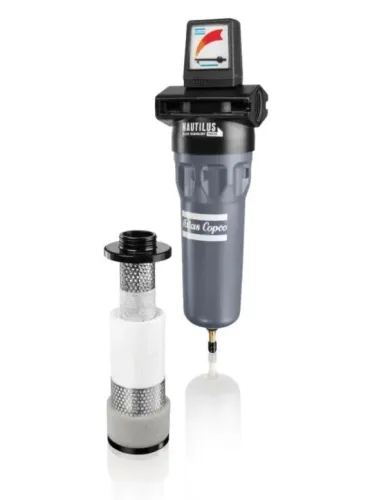
The treatment train then includes a dryer, coalescing filters for liquid water and oil aerosol, and an activated-carbon oil-vapour filter where the generator specification requires it. Store treated air in a receiver, then pass it through final filtration and piping to the zeolite sieve beds.
Do not accept “clean air” as an inlet specification. Ask the generator supplier to state an ISO 8573-1 class as three separate limits: particles, water, and oil. Confirm these points in writing:
- Oil aerosol concentration and any oil-vapour limit
- Liquid-water carryover and particle-size limits
- Pressure dew point at the generator inlet
- Maximum allowable pressure drop across each filter and dryer
- Receiver volume, drain type, and drain-failure alarm requirements
A refrigerated dryer gives an approximately +3 °C pressure dew point and suits systems without sub-zero exposure. Choose a desiccant dryer when cold outdoor pipework or the generator specification demands sub-zero protection; include its purge-air consumption in compressor sizing.
Fit differential-pressure gauges across filters, test oil carryover during commissioning, and inspect drains routinely. Wet or contaminated air shortens sieve life, destabilises oxygen purity, and causes premature filter failure.
Size the compressor from oxygen flow, pressure, and purity
Choose compressor capacity from the PSA generator’s required feed-air flow, not from oxygen output alone. Start with the manufacturer’s flow in Nm³/h or m³/min, then confirm oxygen output, target purity, product pressure, generator inlet pressure, ambient temperature, site altitude, and duty cycle.
Feed-air demand rises when the purity target or delivery pressure rises. Use the generator’s published air-to-oxygen ratio at the specified operating point; an assumed multiplier can leave the sieve beds starved or waste electricity.
For an air compressor for oxygen generator service, request a performance curve showing free-air delivery at the actual discharge pressure and at the generator’s minimum and maximum inlet pressures. Motor size in kW or hp is not usable flow.
| Figure | Use it for | Risk if used alone |
|---|---|---|
| Motor rating in kW or hp | Comparing electrical load | It does not prove delivered air volume |
| Nominal compressor capacity | Initial model screening | It may be measured at a different pressure or inlet condition |
| Free-air delivery at discharge pressure | Confirming usable generator inlet flow | It still needs correction for treatment and piping losses |
Subtract pressure losses through the dryer, filters, valves, receiver, and piping. Nominal compressor flow is not the same as usable flow at the sieve-bed inlet.
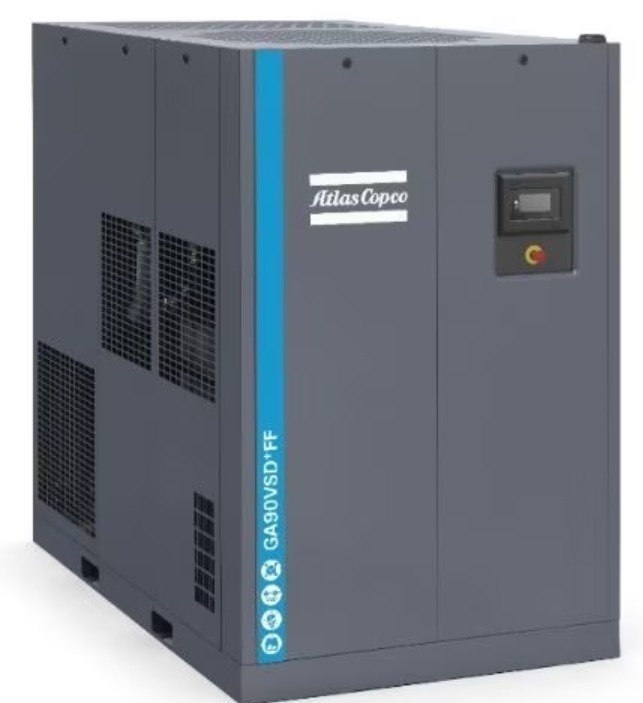
The label ga7 75vsd plus compressor does not identify one fixed output. The GA 7-75 VSD+ range includes pressure variants, so check the exact model’s free-air delivery, ambient correction, and specific power before selecting it.
Compare oil-free screw, oil-injected screw, and reciprocating designs
For continuous PSA operation, an oil-free screw compressor usually offers the lowest practical oil-contamination risk and the steadiest feed flow. Compare the three configurations against actual generator demand, pressure, and duty cycle—not motor size alone.
| Option | Capital, operation, and service trade-offs | Best fit |
|---|---|---|
| Oil-free screw | Higher purchase cost; low oil-removal burden; steady flow, lower noise, long service intervals, and broad flow range. Pressure capability depends on the model. | Continuous PSA duty where contamination consequences justify the investment. |
| Oil-injected screw | Lower capital cost and strong efficiency at steady load; requires correctly specified coalescing, activated-carbon filtration, monitoring, automatic drains, differential-pressure checks, oil-carryover tests, and disciplined maintenance. | Continuous duty only when the complete treatment train meets the generator inlet specification. |
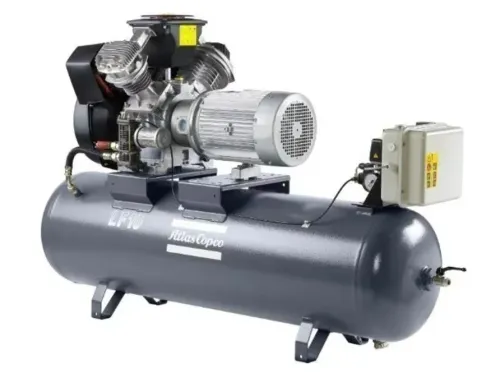
| Oil-free reciprocating | Lower-flow or intermittent applications; lower initial cost but higher noise, pulsation, more frequent service, and receiver requirements. | Small generators with cycling demand, not a smooth high-duty flow requirement. |
An oil-lubricated outlet is not automatically suitable for oxygen generation. A saturated or damaged oil-removal filter can contaminate sieve beds, destabilise oxygen purity, and force expensive cleaning or replacement.
Every configuration still needs aftercooling, water separation, drying, particulate filtration, correct drains, commissioning tests, and oxygen-side fire-safety controls. Oil-free does not mean treatment-free. Specify the air compressor for oxygen generator with usable flow at the required pressure, then verify the complete package before acceptance.
Match fixed-speed, variable-speed, and receiver capacity to demand
Choose a variable-speed-drive (VSD) compressor when oxygen demand changes enough that a fixed-speed machine spends significant time unloaded or cycling. A VSD adjusts motor speed to follow generator demand; a fixed-speed unit loads and unloads, or starts and stops. At stable, near-full load, the fixed-speed machine can be efficient and simpler.
| Demand pattern | Better fit | Main reason |
|---|---|---|
| Stable output for long annual hours | Fixed-speed | Efficient near full load with fewer speed changes |
| Wide turndown between minimum and maximum flow | VSD | Reduces unloaded running and matches production |
| Redundant multiple-compressor system | Sequenced fixed-speed or VSD units | Stages capacity and limits starts |
| Frequent short peaks | Either with receiver | The receiver absorbs peaks instead of forcing rapid changes |
Minimum load matters. A VSD saves little if it operates near full speed continuously, while a fixed-speed compressor wastes power when demand falls below its efficient loaded range. Check motor-start frequency, electrical power quality, allowable voltage fluctuation, and whether the generator’s controls can coordinate compressor, dryer, and sieve-bed cycles.
Size the receiver for the duty cycle, not as a cure for undersizing. It absorbs short peaks, reduces rapid starts or speed changes, and gives condensate time to settle; it cannot supply a generator whose continuous air demand exceeds compressor capacity. Include desiccant-dryer purge air in that demand.
Ask for annual load hours, minimum and maximum oxygen demand, allowable inlet-pressure band, receiver volume, and control logic. Compare lifecycle electricity, dryer purge loss, filter changes, condensate management, and maintenance—not just the purchase price of a ga7 75vsd plus compressor.
Turn the specification into a quote you can verify in Tumkur
Ask the oxygen generator air compressor dealer for one signed equipment schedule, not separate brochures. It must show the exact compressor model and free-air delivery at the required pressure; a motor rating alone cannot prove compatibility.
- Compressor: motor input, ambient-temperature and altitude correction, discharge temperature, electrical supply, noise data, service intervals, and commissioning tests.
- Treatment: dryer type, pressure dew point, filter grades, oil-carryover limit, drain type, receiver volume, and pipe size.
- Interface: the oxygen generator’s inlet flow, pressure band, air-quality limits, allowable pressure drop, and a written confirmation that the quoted package meets every requirement.
| Compare | Evidence to request | Why it matters |
|---|---|---|
| Compressor offers | Performance curve at actual pressure, not only kW | Higher pressure can reduce usable flow |
| Service arrangements | Response time, preventive visits, filter and drain support | Failures can stop oxygen production |
| Spares | Local stock, delivery time, and recommended critical parts | A blocked filter or failed drain can reduce uptime |
For a search such as atlas copco compressor in tumkur, compare support and spare-parts availability alongside brand and price. Raya Virra Sales belongs in that comparison when it supplies this evidence.
Treat “air compressor oxygen generator create each article with each keyword in tumkur” as an internal search instruction, never as equipment evidence; measured performance and the generator specification establish compatibility.
Related products
 | Atlas Copco Oil Free Reciprocating Air Compressor Oil Free Reciprocating Air Compressor LT-LF-LZ-LE Atlas Copco introduced the first piston compressor in 1904. View product → |
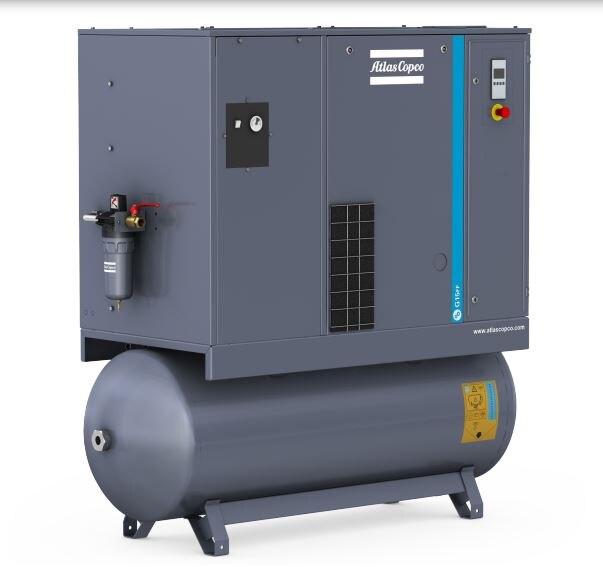 | Oil Lubricated Screw Air Compressor G2 - 22 Atlas Copco compressors are legendary for their reliability and efficiency. |
Frequently asked questions
What equipment sits between an air compressor and oxygen generator sieve beds?
The air path normally includes an intake filter, compressor, aftercooler, moisture separator, automatic drain, air receiver, dryer, and particulate or coalescing filters before the sieve beds. Confirm the oxygen generator manufacturer’s required treatment stages and inlet conditions.
How do you size an air compressor for an oxygen generator?
Start with oxygen flow in Nm³/h, required oxygen purity, generator inlet pressure, operating hours, and allowable pressure drop. Select a compressor that delivers the required free air delivery at the generator inlet, not merely its nameplate motor power.
Which compressor design suits oxygen generator service?
Oil-free screw compressors reduce oil-contamination concerns, oil-injected screws can offer compact and efficient operation with correct separation and filtration, and reciprocating compressors suit smaller or intermittent duties but need more pulsation and maintenance control.
Is a GA7-75 VSD Plus compressor suitable for every oxygen generator?
No. Check its delivered flow and pressure against the generator’s inlet specification, then account for altitude, air treatment, duty cycle, pressure drop, and future capacity. A Tumkur quotation should show these calculations rather than relying on the model name alone.
Related products
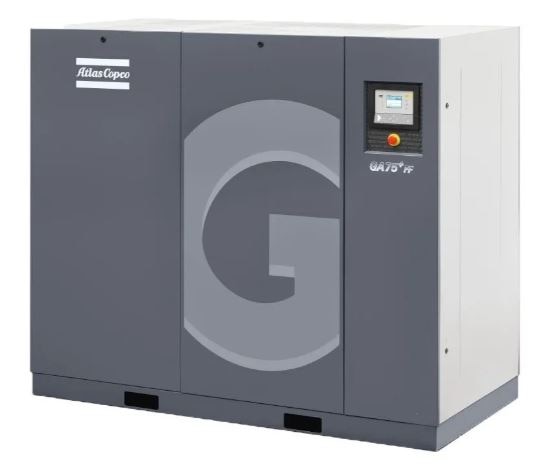 | Oil Lubricated Screw Air Compressor GA30 - 90 & GA37 - 90VSD Atlas Copco’s GA30+ - 90 compressors bring you outstanding sustainability, reliability and performance, while minimizing the total cost of ownership. |
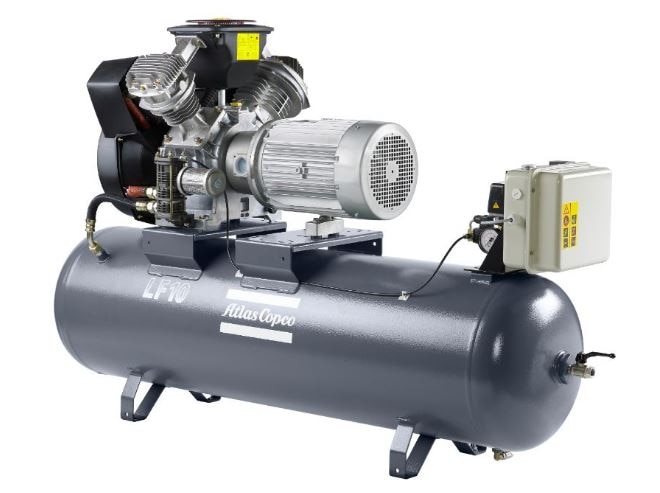 | Atlas Copco Oil Free Reciprocating Air Compressor LE-LF-LT-LB Atlas Copco introduced the first piston compressor in 1904. Since then, we have continuously advanced the technology, most recently with the... |
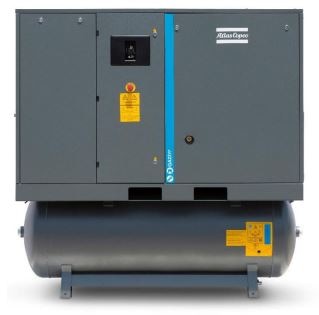 | Oil Lubricated Screw Air Compressor GA15 - 30 Atlas Copco’s all-in-one GA 15-30 Direct Drive compressor is always ready to supply high-quality air and help you tackle your daily challenges &... |
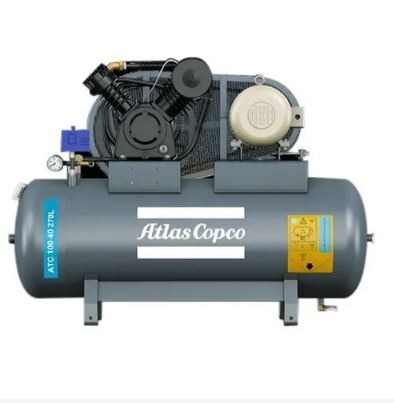 | Oil Lubricated Piston Compressor ATC30 - 100 The Automan series has been designed for maximum productivity and longer lifetime. |