
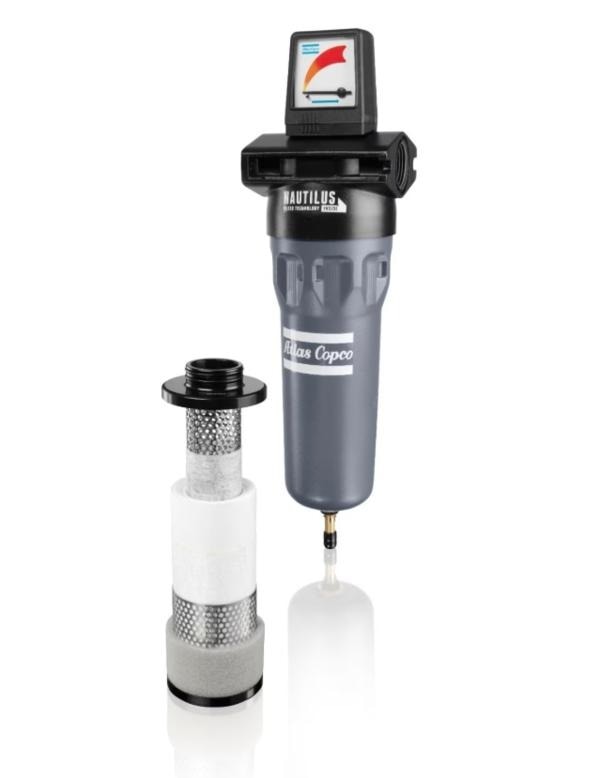
A nitrogen generator needs more than a filter selected by pipe diameter or compressor horsepower. You will be able to map each DD+, PD+, QD+ and UD+ stage to the air-treatment train, compare the pressure, maintenance and contamination risks, and match the final choice to the generator manufacturer’s inlet-air specification.
Key takeaways
- Use QD+ for oil vapour, not liquid oil or bulk water.
- Choose UD+ when one combined filter meets the generator’s air-quality class.
- Check pressure drop, flow rate, oil carryover and particle rating before buying.
What DD+, PD+, QD+ and UD+ Each Do in a Nitrogen Air Train
DD+, PD+, QD+ and UD+ occupy different jobs in a nitrogen air train. A DD+ coalescing prefilter removes bulk liquid, wet dust and larger particles; PD+ provides finer coalescing protection against small particles and oil aerosol; QD+ uses activated carbon for oil vapour and hydrocarbon odours, not liquid oil.
1. For a PSA nitrogen generator, separate particles and bulk water first, remove oil aerosol through DD+ and PD+, dry the air to the generator’s specified pressure dew point, then add QD+ when the feed-air or nitrogen specification limits oil vapour.
2. UD+ combines DD+ and PD+ functions in one body. It saves space and connections, but it does not add drying or activated-carbon adsorption.
3. A PD or UD+ filter cannot create a pressure dew point. Use a refrigerated or desiccant dryer, or the generator’s integrated dryer, when the inlet specification includes one.
4. Filter grade does not determine nitrogen purity. Generator technology, inlet flow and pressure, adsorption or membrane conditions, purge settings and product-gas monitoring control purity.
| Stage | Removes | Correct position |
|---|---|---|
| DD+ | Bulk liquid, wet dust, larger particles | Before fine coalescing |
| PD+ | Fine particles and oil aerosol | Before drying or the generator |
| QD+ | Oil vapour and hydrocarbon odours | After liquid-oil removal |
| UD+ | DD+ and PD+ functions | Combined prefilter and coalescing stage |
Liquid water can damage membranes; oil aerosol can foul membranes or contaminate PSA molecular sieve. Wet dust blocks elements, while oil reaching desiccant or molecular sieve reduces adsorption performance. An Atlas Copco air filter nitrogen generator train therefore needs protection matched to its inlet specification, not simply a DD PD QD filter nitrogen generator label.
UD+ or Separate DD+ and PD+ Filters: Which Arrangement Fits the Installation?
UD+ is preferable when skid length, connection count and service access are tight; separate DD+ and PD+ housings are preferable when you need independent control of each coalescing stage. The right choice depends on maintenance and pressure-drop consequences, not housing price alone.
| Arrangement | Practical advantage | Trade-off |
|---|---|---|
| UD+ | One body, fewer connections and service locations | Confirm whether elements are independently replaceable; one loaded section can make the whole unit a service item |
| Separate DD+ and PD+ | Individual isolation, differential-pressure readings and element replacement | More length, fittings, drains and access points |
| QD+ | Removes oil vapour and hydrocarbon odour | Not a coalescing stage; liquid oil can load carbon, so it should not normally precede DD+ or PD+ |
Separate housings provide clearer troubleshooting: a rising DD+ differential pressure points to bulk water or dirt, while a rising PD+ reading points to fine aerosol loading. They also let you replace one element without disturbing both functions. UD+ reduces leak points, but it does not automatically provide redundancy or lower loaded pressure loss.
Size either arrangement against clean and loaded pressure drop. Excessive restriction raises compressor discharge pressure or leaves too little pressure at the nitrogen generator. Verify drain locations and operation on the wet side; a failed-closed drain carries liquid downstream, while a failed-open drain wastes air.
For an ud plus versus dd pd qd filter for nitrogen generator in bangalore, and any ud plus filter nitrogen generator comparison in bangalore, compare service access, drain hardware and nitrogen shortfall—not just footprint.
Which Nitrogen Generator Air Filter Specifications Actually Control Selection?
Size the filter from the nitrogen generator datasheet, not compressor horsepower or pipe diameter. Record the generator’s actual maximum inlet flow, minimum inlet pressure, maximum inlet temperature, connection size, maximum operating pressure, and allowable clean and loaded pressure drop. Calculate the pressure still available at the generator after the filter reaches its loaded differential pressure.
Use this checklist before comparing a UD+ with separate DD+ and PD+ housings:
- Confirm particle-removal performance and oil-aerosol carryover at a stated test condition; “0.01 micron” is incomplete unless it identifies particle or aerosol performance.
- Specify the residual oil-vapour limit when QD+ activated carbon is required, plus liquid-water handling and automatic-drain type.
- Recalculate catalogue flow for operating pressure and temperature; ratings at a reference condition can undersize a filter at the generator inlet.
- Compare element life in operating hours, oil exposure, drain losses, replacement-element cost and energy cost from pressure drop.
- Treat QD+ service separately: carbon can become exhausted without a large differential-pressure increase, so replace it by adsorption capacity and operating hours.
A search for dd pd qd filter nitrogen generator still needs this datasheet-led check.
| Arrangement | Selection consequence | Main service consideration |
|---|---|---|
| UD+ combination | Shorter installation and fewer service points | Check combined pressure drop and shared replacement interval |
| Separate DD+ and PD+ | Independent isolation and stage-by-stage differential-pressure readings | Replace one element without servicing both functions |
| QD+ after coalescing stages | Controls oil vapour and hydrocarbon odour | Keep liquid oil upstream; carbon loading otherwise accelerates |
Where the Filters Go and How Air Quality Affects PSA or Membrane Performance
A practical UD Plus filter nitrogen generator comparison in Bangalore starts at the compressor outlet, not the generator inlet. An inlet filter cannot correct an oil-flooded compressor, degraded separator element, contaminated aftercooler or failed drain. Monsoon humidity increases condensate load; it does not justify reducing filtration.
Food, pharmaceutical, electronics and oxygen-sensitive packaging may also need a sterile filter, final-use filter, separate dryer, or monitoring for oxygen, dew point and hydrocarbons.
1. Install the aftercooler, moisture separator and receiver before fine coalescing stages. Fit automatic drains to each wet section; a failed-open drain wastes air, while a failed-closed drain carries liquid into the filters and dryer.
2. Place DD+ and PD+ after bulk-water separation. Put the dryer where the generator maker’s pressure-dew-point requirement demands it, then confirm dew point at the generator inlet under peak flow and temperature.
3. Install QD+ after liquid-oil removal when oil-vapour or hydrocarbon control is specified. Do not place carbon ahead of coalescing filtration, because liquid oil can exhaust the carbon bed prematurely.
4. Correct compressor-side carryover before replacing overloaded elements. Check separator differential pressure, aftercooler cleanliness and drain operation during commissioning and maintenance.
| System | Main air-quality risk | Performance consequence |
|---|---|---|
| PSA | Molecular-sieve fouling from oil, water or wet dust | Reduced adsorption and purge inefficiency |
| Membrane | Wetting, oil damage and blocked separation surfaces | Lower separation performance and shortened membrane life |
Use the generator datasheet for the final pressure-dew-point and residual-oil limits; a PD+ or UD+ stage filters contamination but does not dry air.
A Practical Buying Checklist for the Generator’s Required Air-Quality Class
Buy against the generator’s inlet limits, not the filter label. Request nitrogen generator air filter specifications in writing and record maximum flow, minimum pressure, maximum temperature, allowable clean and loaded pressure drop, pressure dew point, residual oil and particle limits.
| Option | Selection implication | Check before purchase |
|---|---|---|
| UD+ | One housing for DD+ and PD+ functions | Confirm combined pressure drop and element service arrangement |
| Separate DD+ and PD+ | Independent stages, drains and readings | Allow more space, connections and service points |
| QD+ | Activated carbon for oil vapour and hydrocarbons | Replace by adsorption capacity and operating hours, not differential pressure alone |
Translate the limits into an ISO 8573-1 target with separate classes for particles, water and total oil. One class does not cover all three contaminants.
- Confirm whether the end process adds a hydrocarbon, sterility or final-product requirement.
- Decide whether you need UD+, separate DD+ and PD+, QD+, a refrigerated or desiccant dryer, and a final-use or sterile filter.
- Verify flow, pressure drop and air quality at the generator inlet with clean elements and again under loaded conditions.
- Test every automatic drain. A failed-open drain wastes air; a failed-closed drain carries liquid into the dryer or generator.
- Schedule coalescing-element replacement by operating hours, oil exposure and pressure-drop trend.
For an UD Plus versus DD, PD, QD filter for a nitrogen generator in Bangalore, Raya Virra Sales can compare an Atlas Copco air filter nitrogen generator arrangement against the datasheet, pressure-drop budget and access constraints. The documented inlet result remains the decision.
Related products
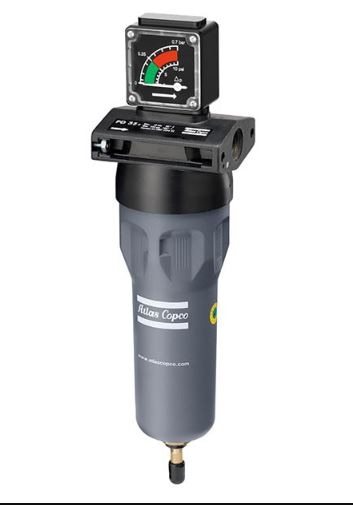 | Air Line Filters DD-PD-QD In almost all applications, contamination of the air supply can cause serious performance decline and increase maintenance costs in terms of actual... |
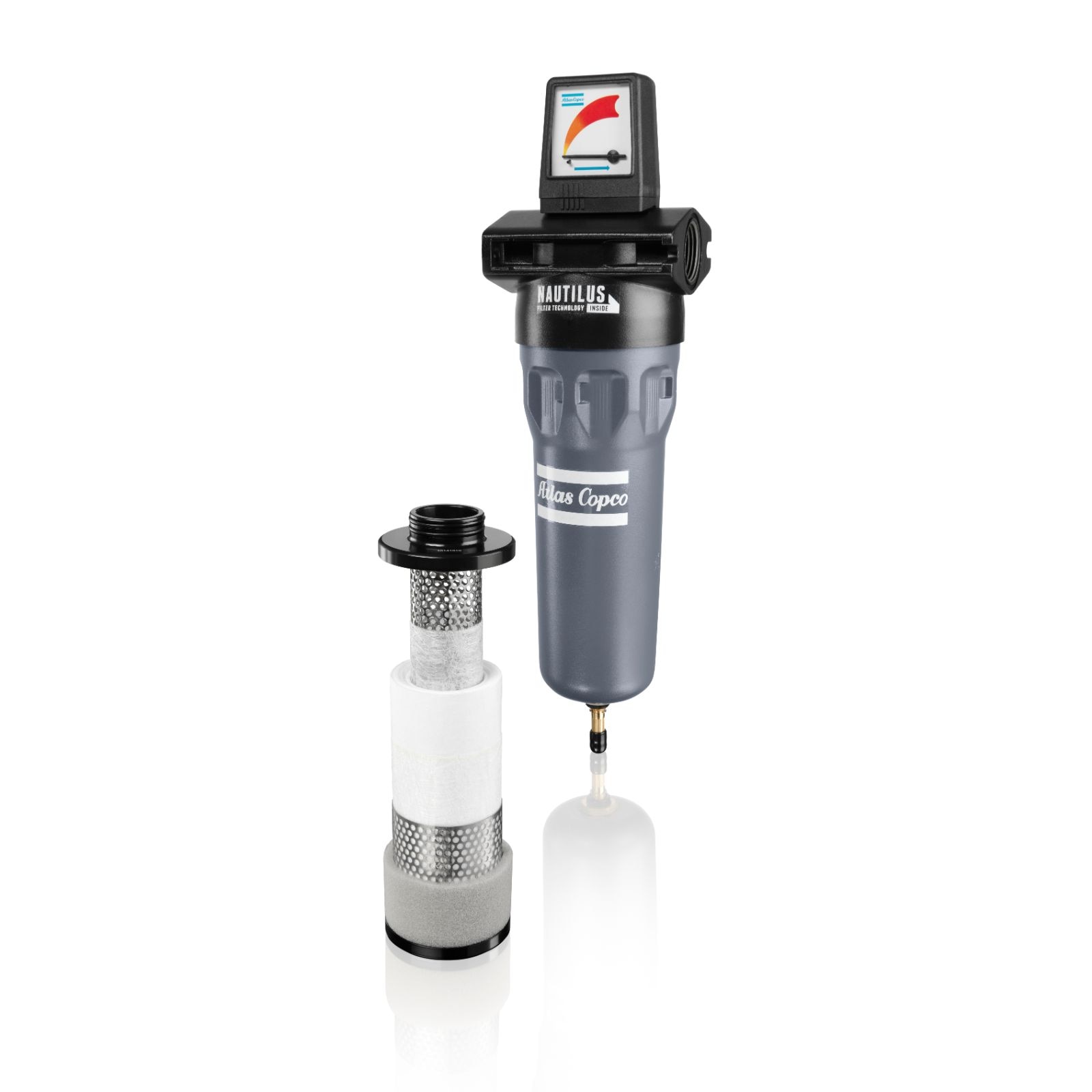 | Air Line Filters UD+ UD+ filters efficiently reduce oil aerosol, wet dust and water drops in your compressed air stream to protect your investment, equipment and... |
Frequently asked questions
What do DD+, PD+, QD+ and UD+ filters do in a nitrogen air train?
DD+ removes bulk liquid, wet dust and larger particles. PD+ provides finer coalescing protection against small particles and oil aerosol. QD+ uses activated carbon to remove oil vapour and hydrocarbon odours. UD+ combines filtration stages in one housing for installations that meet its specified air-quality performance.
Should you choose UD+ or separate DD+ and PD+ filters for a nitrogen generator?
Choose UD+ when its rated flow, pressure drop, particle removal and oil carryover meet the generator’s required air-quality class. Use separate DD+ and PD+ filters when you need staged protection, easier fault diagnosis, different flow capacities or independent element replacement.
Which nitrogen generator air filter specifications control selection?
Compare rated flow at the actual inlet pressure, maximum working pressure, pressure drop, particle rating, oil aerosol and vapour performance, water removal, connection size and replacement-element availability. Check the generator manufacturer’s specified inlet air quality before selecting a filter.
Where should filters go before a PSA or membrane nitrogen generator?
Install the coalescing stages upstream of the generator, with drainage arranged for bulk liquid and condensate. Add QD+ activated-carbon filtration when the generator requires oil-vapour removal. Keep piping clean, prevent bypass around filter elements and verify air quality at the generator inlet.
Related products
 | Air Line Filters Pre, Micro & Activated Carbon Filter In almost all applications, contamination of the air supply can cause serious performance decline and increase maintenance costs in terms of actual... |
 | Air Line Filters Combination of Pre & Micro Filter UD+ filters efficiently reduce oil aerosol, wet dust and water drops in your compressed air stream to protect your investment, equipment and... |
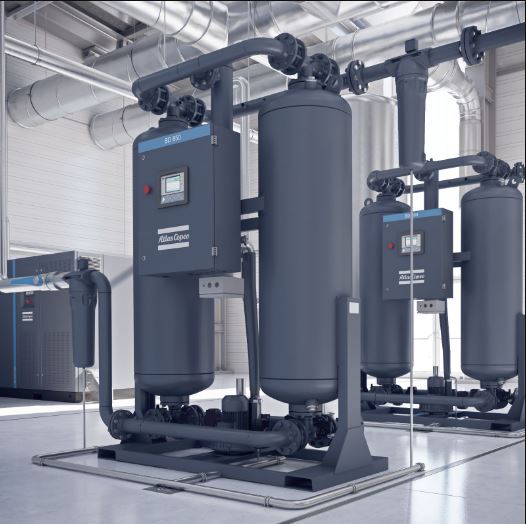 | Desiccant Type Air Dryer Dry and clean compressed air is essential for a broad range of industrial applications. View product → |
 | Stainless Steel Piping system ensures 100% oil-free air delivery from the generation to the point-of-use, in compliance with the highest quality standards. View product → |