
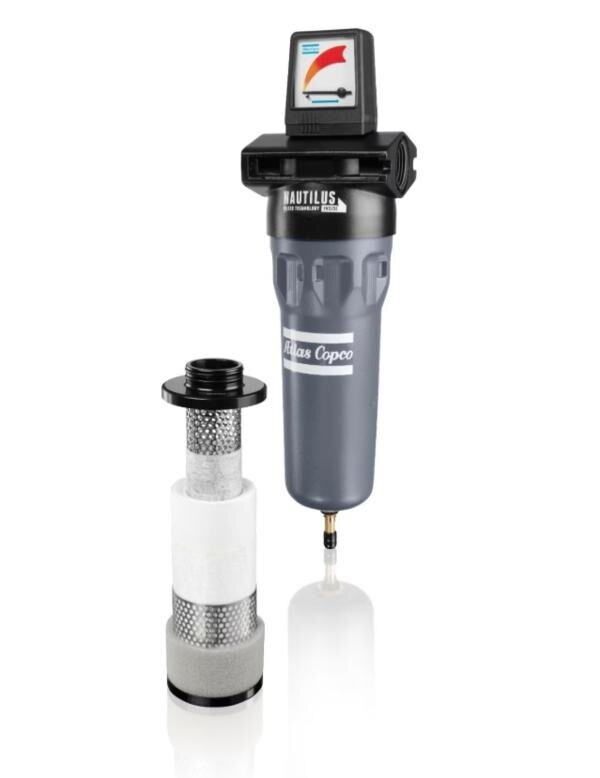
An oxygen generator needs more than a filter element: its feed-air assembly must control particles, liquid water, oil aerosols and, when specified, oil vapour before air reaches the PSA molecular-sieve beds. By the end, you will know which parts belong in the assembly, how to match the treatment stages to the generator specification, and how to check installation, servicing and compatibility.
Key takeaways
- Remove water, oil and dust before air reaches the PSA beds.
- Match filter capacity to flow, pressure and required air quality.
- Confirm filter element type, flow direction and connection size before installation.
- Check drains, pressure drop and element condition during maintenance.
Why clean, dry feed air matters before the PSA beds
A wet or oily feed stream can damage PSA performance before the oxygen generator produces its first cycle. Water entering the zeolite molecular-sieve beds reduces adsorption capacity and accelerates sieve degradation; oil and dust can foul the bed, valves and passages.
The feed-air target is the generator’s specified pressure dew point and ISO 8573-1 air class, not a generic compressor-room setting.
Specify the Atlas Copco air-filter inclusions oxygen generator air requires as a complete package:
- Install an aftercooler, receiver and water separator after the compressor to remove bulk heat and liquid condensate.
- Add particulate and coalescing filtration to capture solid particles, liquid water and oil aerosols before the dryer and PSA inlet.
- Use refrigeration or desiccant drying to meet the generator’s documented pressure-dew-point limit.
- Add an activated-carbon adsorption stage, such as a QD+ type, when the specification limits oil or hydrocarbon vapour. Carbon is not a substitute for upstream aerosol and water removal.
- Confirm the filter housing, inlet and outlet connections, element, seals or O-rings, differential-pressure indicator, condensate drain, drain trap and mounting hardware where fitted.
The filter assembly conditions feed air; it does not filter the oxygen product or prove oxygen purity. Medical, breathing-gas and food-contact applications need product-side monitoring and application-specific safeguards. Commissioning still requires an oxygen analyser, because purity also depends on pressure, temperature, cycle settings, leaks, sieve condition and demand.
What each filter stage removes from compressor air
Each stage targets a different contaminant. An aftercooler and water separator remove bulk liquid water; the dryer removes water vapour. Coalescing elements then capture fine liquid water droplets and oil aerosols, while activated carbon adsorbs oil or hydrocarbon vapour.
| Option | What it removes | When it applies |
|---|---|---|
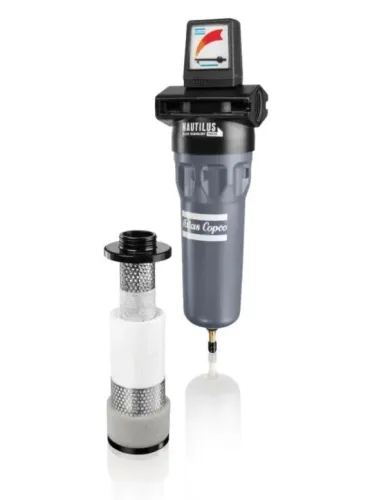
| DD+ | Particles and coarse liquid oil or water aerosols | As a general-purpose prefilter |
| PD+ | Fine particles and oil aerosols down to the stated performance rating | As the high-efficiency coalescing stage |
| QD+ | Oil vapour and hydrocarbon vapour by activated-carbon adsorption | When the generator specification limits gaseous hydrocarbons |
| UD+ | High-efficiency particle and oil-aerosol removal in a combined ultra-high-efficiency element | When the approved Atlas Copco arrangement permits one combined stage |
A QD+ element fails quickly if liquid oil or water reaches its carbon bed. Install it downstream of the DD+/PD+ coalescing protection and a suitable dryer, following the generator manual.
A drain matters as much as the element. A blocked or failed-closed drain leaves condensate in the housing; a failed-open drain wastes compressed air and can mask a feed problem. Test the drain and route its discharge safely.
Do not treat “0.01 micron” as an ISO 8573-1 air class. That figure describes particle or aerosol performance under stated test conditions; ISO 8573-1 separately rates particles, water and oil. An Atlas Copco air filter for an oxygen generator must match all three limits.
How to match the filter to flow, pressure and air-quality requirements
Select the filter for the generator’s actual inlet flow at the site’s minimum operating pressure and temperature, not from pipe size or compressor nameplate flow alone. A PSA generator’s cyclic demand, shared-header loading and pressure fluctuations determine the required capacity.
1. Record the generator’s inlet flow in Nm³/h or m³/min, minimum and normal pressure, inlet temperature, connection size and connection type. Include the demand of other generators using the same header.
2. Choose a housing whose rated pressure and temperature exceed those site conditions. Use the manufacturer’s flow chart at the actual pressure, not its maximum headline flow; an undersized housing creates excessive pressure drop and starves the molecular-sieve beds.
3. Match the element to the housing, stage and required end-of-life pressure drop. The oxygen generator air filter parts must include the correct element grade, seals or O-rings, drain arrangement and differential-pressure indicator for that housing.
4. Specify ISO 8573-1 classes separately for particles, water and oil. A “0.01 micron” element rating describes aerosol performance under stated test conditions; it does not prove the outlet meets a complete particle, water and oil class. Add oil-vapour adsorption when the generator manufacturer requires it.
5. Check the filter train against the compressor, dryer and application. Medical oxygen production may impose tighter documented feed-air controls than an industrial generator, and filtration alone cannot verify oxygen purity; commissioning still requires an oxygen analyser.
How to identify, install and maintain the correct filter assembly
Confirm the replacement against the filter housing nameplate and the generator manual, not against pipe diameter alone. Match the Atlas Copco element code, housing series, inlet and outlet size, flow rating at the generator’s minimum pressure and temperature, pressure rating, flow direction, and seal or O-ring specification.
A physically similar element can create excessive pressure drop or release contaminants.
- Isolate and depressurise the filter, then close or lock out any bypass. Remove the old element without dropping dirt into the outlet pipe.
- Check the bowl, threads, sealing faces and drain connection for damage. Wipe them with lint-free material; keep solvent, grease, thread sealant and loose PTFE tape out of the air path.
- Fit the specified element and a clean, undamaged seal. Install the bowl in its marked orientation, with clearance for element removal and drain servicing.
- Reconnect piping in the marked flow direction. Open the isolation valve slowly, check for leaks, and keep the bypass shut unless the generator manufacturer has approved a controlled maintenance procedure.
- Test the condensate drain before placing the PSA generator under load. A blocked drain carries liquid downstream; a stuck-open drain wastes air and can pull contaminated air into the line.
Record the clean-element differential pressure after commissioning. Read the indicator during the generator’s highest-demand cycle and replace the element at the manufacturer’s pressure-drop limit, or sooner if the reading rises sharply. Check the drain and pressure drop at each service visit; a clogged element can starve the PSA beds even while compressor pressure appears normal.
What a site survey should verify before an installation in Tumkur
Do not choose a filter from the generator’s nameplate alone. Before an Atlas Copco filter installation in Tumkur, record the conditions that determine element capacity, pressure drop and contaminant control:
1. Confirm the oxygen-generator model, required inlet flow, minimum and maximum inlet pressure, inlet temperature and connection size. Use actual measured demand, not compressor rated flow.
2. Measure compressor discharge pressure and ambient temperature at the proposed location. Heat, pressure fluctuation and long pipe runs change the air volume reaching the element.
3. Identify the compressor type and oil carryover risk, then verify that the aftercooler, receiver, water separator and specified dryer are installed and working. A filter cannot replace a failed dryer.
4. Confirm the required ISO 8573-1 air-quality class and whether the application is industrial or medical. Ask which Atlas Copco manual defines the approved DD+, PD+, QD+ or UD+ arrangement for that generator.
5. Check drain routing, condensate disposal, available electrical supply for an electronic drain, mounting clearance and access for element replacement and differential-pressure readings.
6. Inspect the pipework for rust, welding scale, thread sealant and construction dust. Clean and blow through the header before opening the final connection to the PSA system.
Raya Virra Sales can use these measurements to distinguish a suitable Atlas Copco element combination from a convenient-looking substitute.
Filtration has a boundary: a coalescing element removes liquid water and oil aerosols, not oil vapour. Activated carbon needs clean, dry upstream air, while filter selection alone cannot prove PSA oxygen purity or correct inadequate compressor capacity.
Related products
 | Air Line Filters Pre, Micro & Activated Carbon Filter In almost all applications, contamination of the air supply can cause serious performance decline and increase maintenance costs in terms of actual... |
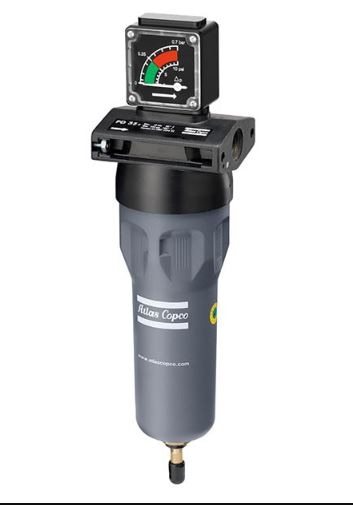 | Air Line Filters DD-PD-QD In almost all applications, contamination of the air supply can cause serious performance decline and increase maintenance costs in terms of actual... |
Frequently asked questions
Why must compressor air be clean and dry before PSA oxygen beds?
Water reduces zeolite adsorption capacity, while oil and dust foul the beds, valves and internal passages. Treat the air before it enters the generator.
What should an oxygen generator air filter remove?
The filtration train must address compressor carryover, liquid water, aerosols, oil vapour and solid particles. The required stages depend on the generator’s air-quality specification.
How do you select an Atlas Copco air filter for an oxygen generator?
Compare the filter’s rated flow, maximum working pressure, connection size, filtration grade and pressure-drop limit with the compressor and generator requirements.
What should installation and maintenance checks include?
Install the element in the marked flow direction, verify seals and connections, drain collected liquid, and replace the element when pressure drop or the service interval requires it.
What should a Tumkur site survey verify before installation?
Record compressor capacity, operating pressure, pipe size, air temperature, drain arrangements, generator demand, available space and the route from treatment equipment to the PSA inlet.
Related products
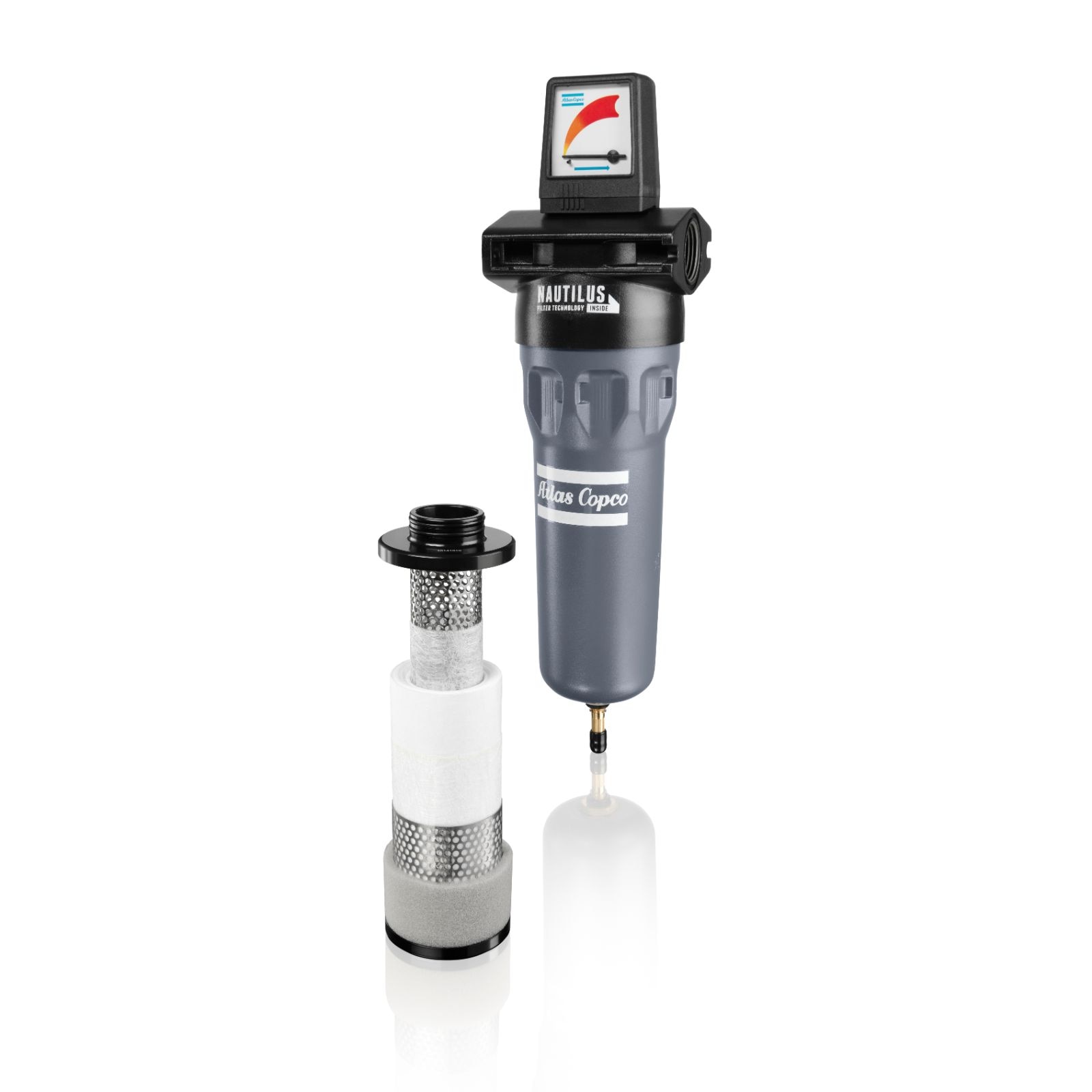 | Air Line Filters UD+ UD+ filters efficiently reduce oil aerosol, wet dust and water drops in your compressed air stream to protect your investment, equipment and... |
 | Air Line Filters Combination of Pre & Micro Filter UD+ filters efficiently reduce oil aerosol, wet dust and water drops in your compressed air stream to protect your investment, equipment and... |