
Choosing a variable speed screw compressor depends on the shape of your air demand, not simply the motor size or highest connected load. By comparing demand patterns, measuring the existing system and calculating the full operating cost, you can decide whether VSD is worth its higher purchase price for your workshop or plant.
Key takeaways
- Choose VSD when air demand changes across shifts or production cycles.
- Measure flow and pressure before selecting compressor horsepower.
- Compare annual energy savings with the VSD purchase premium.
- Check Bangalore site power, ventilation, service access and compressed-air piping.
What a Variable Speed Screw Compressor Changes in Daily Operation
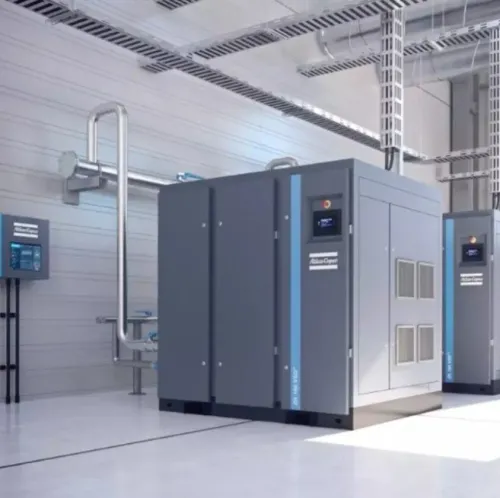
A variable speed screw compressor changes motor speed as air demand rises or falls. Its variable-frequency drive slows the motor during low-use periods and increases speed when tools or production equipment demand more air. A fixed-speed machine runs at one speed, then unloads when pressure reaches its setpoint; the motor still consumes power while unloaded.
| Option | Variable speed screw compressor | Fixed-speed screw compressor |
|---|---|---|
| Motor control | Speed follows demand | Motor runs at one speed |
| Low demand | Slows down and reduces power use | Unloads while continuing to draw power |
| Pressure | Tighter control with fewer pressure swings | Wider load/unload band |
| Starting | Fewer stop-start events | Repeated cycling can increase wear |
| Purchase price | Higher initial cost | Lower initial cost |
| Best operating pattern | Demand changes across the shift | Demand stays close to a steady load |
Common variable speed screw compressor applications include workshops with fluctuating tool use, fabrication, CNC machining, packaging and multi-shift manufacturing. The difference matters when your compressor spends long periods below full output; an energy efficient screw compressor has less idle energy to waste. It matters less when demand stays near full capacity around the clock.
Do not expect VSD to repair a leaking system or uncontrolled end uses. Very small intermittent loads, inadequate electrical supply and poor maintenance can erase the benefit. In a multi-compressor room, use the VSD unit as a trim machine only when sequencing prevents fixed-speed machines from short-cycling.
VSD changes motor speed, not air purity; dryers and filters still determine the required ISO 8573-1 air-quality class.
Match VSD to the Way Your Trade Uses Air
A VSD earns its premium when compressed-air demand rises and falls across the shift. It slows the motor during quiet periods instead of making a fixed-speed compressor run unloaded, so workshops, fabrication shops and plants with staggered shifts gain the clearest benefit.
| Trade or production pattern | VSD fit | Reason |
|---|---|---|
| Workshops with fluctuating tool use | Strong | Grinders, impact wrenches and spray equipment create changing demand |
| Fabrication, CNC machining and automotive service | Strong | Machines and tools operate intermittently rather than together |
| Packaging, food processing and multi-shift production | Strong | Demand changes between lines, shifts and production batches |
| Continuous process near full capacity | Weak | A fixed-speed machine running close to full load leaves little speed-saving opportunity |
| Very small, brief air demand | Weak | Frequent low-flow operation can make control range, minimum speed and cycling uneconomic |
Common variable speed screw compressor applications include robotic cells, CNC plants and production lines that start or stop independently. A stable process can still justify VSD as a trim compressor, but compare the cost against a properly sized fixed-speed base-load machine.
A variable speed screw compressor for trade in Bangalore requires a site assessment, not a catalogue choice. Record pressure, flow by shift, unloaded hours, leakage, electricity tariff, ambient temperature, air-quality class and maintenance cost before calculating payback. VSD controls motor speed; it does not provide cleaner air.
Select oil-injected or oil-free equipment, dryers, filters and drains for the required ISO 8573-1 class.
Poor electrical capacity, heavy off-shift leakage or badly controlled end uses can erase the expected saving. Repair leaks and correct artificial demand before paying for speed control.
Size the Compressor from Measured Demand, Not Horsepower
A compressor sized from peak flow alone can spend much of its time below its effective turndown range, unloading, hunting or blowing off air. Measure the demand profile before choosing capacity, receiver volume or pressure.
1. Log flow in cubic metres per minute (m³/min) or cubic feet per minute (cfm) at the main header across every shift. Record minimum, normal and maximum demand, plus short peaks from tools, valves and blow-off nozzles.
2. Record pressure at the compressor discharge and at the most pressure-sensitive point of use. Note the required working pressure, pressure drop through dryers and filters, and the current control-band settings; an inflated setpoint increases leakage and artificial demand.
3. Measure loaded hours, unloaded hours, starts, stop frequency and off-shift pressure decay. An ultrasonic leak survey identifies wasted air, while a timed pressure-decay test shows whether the header loses pressure when production stops.
4. Record receiver volume, pipe size, air-quality requirement, ambient temperature, altitude and electrical supply. Match the receiver to the demand pattern and control strategy: it must absorb rapid fluctuations and short peaks, not simply accompany the compressor.
For a VSD screw compressor for manufacturing, compare the logged minimum and maximum flow with the manufacturer’s turndown curve and control response. Fast cycling loads often need a correctly sized receiver and sequenced controls rather than a compressor chasing every fluctuation. Select capacity from measured demand, then verify pressure, receiver sizing and lifecycle cost together.
Calculate the Real Energy Case Before Paying the Premium
A VSD premium pays back only when measured load variation creates enough kWh savings. Compare annual electricity cost, maintenance cost and purchase premium—not motor nameplate efficiency alone.
1. Log discharge pressure, flow by shift, loaded and unloaded hours, operating hours and electricity tariff. Compare specific power in kW per m³/min or kW per 100 cfm at the same inlet conditions, discharge pressure, air-delivery method and operating point.
A VSD reduces motor speed during low demand; savings shrink when demand stays near full load.
2. Correct pressure before comparing machines. Lowering an unnecessarily high setpoint can save more than changing compressor type, because higher pressure increases leakage and artificial demand. Do not make a VSD compensate for a poorly controlled pressure band.
3. Test the distribution system. Run an off-shift pressure-decay test and an ultrasonic leak survey; leaks consume power while the compressor maintains pressure without producing useful air. Check pipe diameter, long runs, bends and filters for pressure drop, since restricted piping forces a higher discharge pressure.
4. Price the complete air system. Include dryers, filters, drains and separators selected for the required ISO 8573-1 air-quality class, plus their pressure drop, service and replacement costs. Oil-injected and oil-free machines carry different contamination risks and lifecycle requirements.
Calculate annual savings from measured kWh reduction multiplied by tariff, then subtract added maintenance costs before dividing the VSD premium by the result. A so-called energy efficient screw compressor, including a VSD screw compressor for manufacturing, is a poor investment if leaks, treatment losses or low operating hours dominate the bill.
Check the Site, Electrical System and Service Plan in Bangalore
Catalogue flow is not site flow. For an Atlas Copco screw compressor in Bangalore, request performance data at your actual discharge pressure, inlet temperature, elevation and ventilation conditions, then compare specific power in kW per m³/min at the same operating point.
Ask Raya Virra Sales to show the derated delivered flow, pressure range and turndown rather than only the motor rating.
Before comparing models, record:
- Operating pressure at the compressor and at the furthest end use.
- Flow by shift, unloaded hours, start-stop events and leakage measured during shutdown.
- Air-quality class, including oil, particles, moisture and any food-contact requirement.
- Ambient temperature, cooling-air path, room clearance, elevation and dust exposure.
- Electricity tariff, maximum demand charges, supply voltage, harmonic limits and maintenance cost.
| Comparison | What to verify | What goes wrong if ignored |
|---|---|---|
| Site performance | Delivered flow and specific power at actual temperature, elevation and pressure | The machine runs hot or fails to meet peak demand despite matching catalogue capacity |
| Electrical fit | Harmonic mitigation, earthing, electromagnetic-interference control, motor-cable length, inverter cooling and voltage compatibility | Drive trips, overheats or disturbs sensitive CNC, robotic or control equipment |
| Service plan | Oil and filter intervals, controller diagnostics, stocked parts, trained technicians and response time in Bangalore | A small fault becomes prolonged downtime |
For a variable speed screw compressor for trade in Bangalore, price the service response and annual maintenance beside the purchase price. A low-cost machine with slow parts support can cost more than a higher-priced model that keeps production running.
Related products
 | Air Compressors Variable Speed Drive Compressor Atlas Copco’s GA 7-75 VSD iPM compressors feature smart drive and intelligent control for unprecedented reliability and efficiency. View product → |
 | Air Compressors Variable Speed Drive Air Compressor Atlas Copco has turned the compressed air industry on its head by redesigning the conventional layout of a typical air compressor. View product → |
Frequently asked questions
What does a variable speed screw compressor change in daily operation?
It adjusts motor speed to match air demand, reducing unloaded running compared with a fixed-speed compressor.
Which trades and applications suit a VSD screw compressor?
VSD suits operations with fluctuating demand, intermittent tool use, changing shifts or production equipment that cycles on and off.
How should you size a variable speed screw compressor?
Use measured air flow, pressure, operating hours and demand patterns instead of choosing by motor horsepower alone.
How do you calculate whether a VSD compressor will save money?
Compare measured annual energy use, operating hours, electricity rate and expected savings against the VSD purchase and installation premium.
What should you check before installing a compressor in Bangalore?
Confirm electrical capacity, ventilation, ambient conditions, condensate handling, access for maintenance and the supplier’s service plan.
Related products
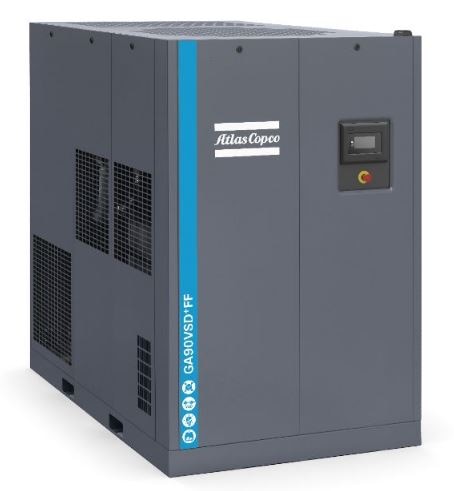 | Variable Speed Drive Air Compressor GA7 - 75VSD iPM Atlas Copco’s GA 7-75 VSD iPM compressors feature smart drive and intelligent control for unprecedented reliability and efficiency. |
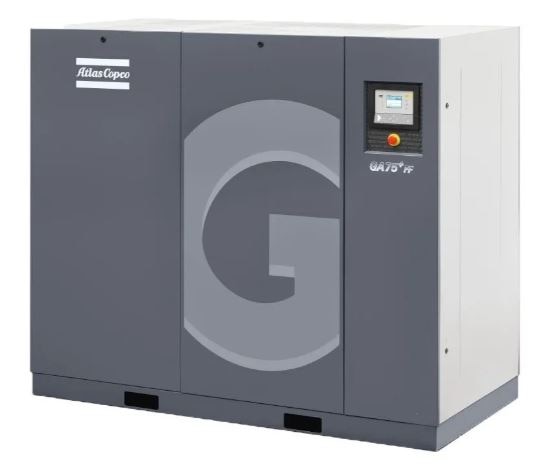 | Oil Lubricated Screw Air Compressor GA30 - 90 & GA37 - 90VSD Atlas Copco’s GA30+ - 90 compressors bring you outstanding sustainability, reliability and performance, while minimizing the total cost of ownership. |
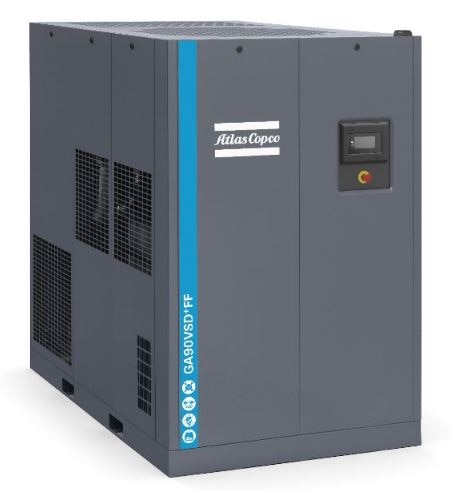 | Variable Speed Drive Air Compressor GA7 - 75VSD+ Atlas Copco has turned the compressed air industry on its head by redesigning the conventional layout of a typical air compressor. |