
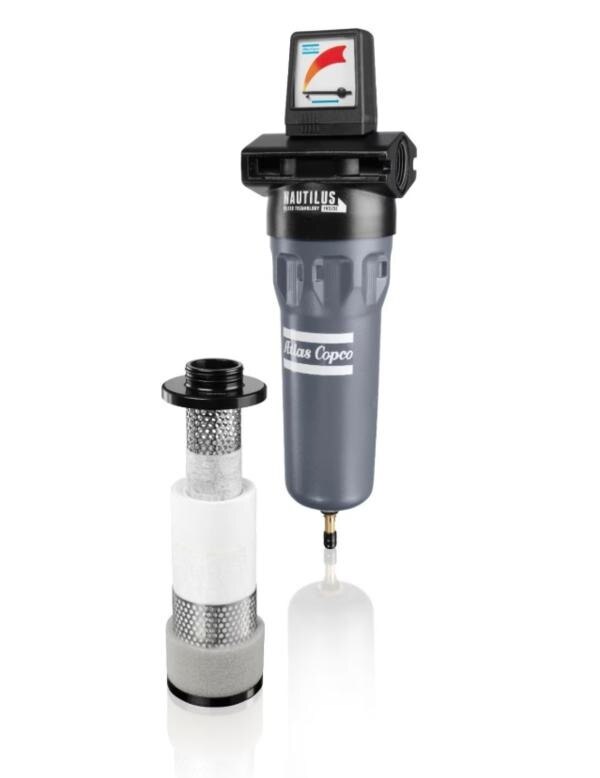
An air filter can stop liquid droplets, oil aerosols and rust particles, but it cannot remove water vapour or control the pressure dew point. You will be able to trace Bangalore monsoon failures from compressor to nitrogen generator, specify the required air quality, and decide whether filtration, drainage, cooling or drying is missing.
Key takeaways
- An air filter removes particles and some liquid water, not compressed-air humidity.
- Install filtration and drying before the nitrogen generator, then verify pressure-dew-point performance.
- Drain wet-air separators and inspect auto drains before monsoon-related faults appear.
- Treat water carryover, pressure loss, and nitrogen purity changes as specification warnings.
What an Atlas Copco air filter can—and cannot—protect against
No: an Atlas Copco air filter alone cannot prevent monsoon-related nitrogen-generator problems. It provides partial protection, not humidity control. The search phrase “atlas copco air filter monsoon problems” matters because filtration and drying solve different failures.
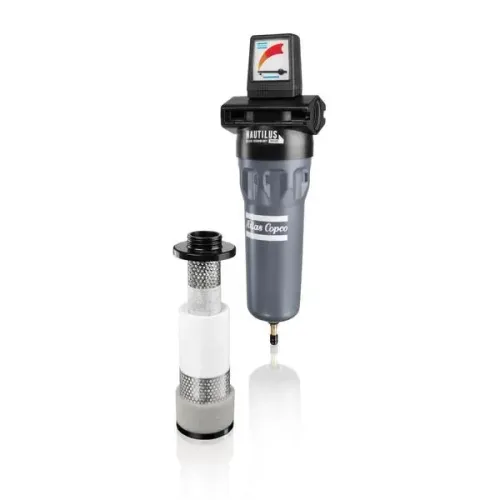
- A particulate filter captures dust, rust and solid debris.
- A coalescing filter removes liquid-water droplets and oil aerosols.
- An activated-carbon stage removes oil vapour that passes through ordinary coalescing elements.
- A dryer removes water vapour by lowering the compressed air’s pressure dew point.
A filter element does not remove water vapour. Condensation can still form downstream when the pressure dew point exceeds the temperature of the distribution pipe or generator inlet. That water can enter the nitrogen generator even when the filter element is clean and its drain is working.
Therefore, “Atlas Copco filter humidity protection” is limited to catching liquid water already present, not preventing new condensate after cooling. PSA beds can become saturated, while membranes can lose performance when feed air remains wet or oil-contaminated.
Select the dryer against the generator manufacturer’s pressure-dew-point requirement: a refrigerated dryer near +3 °C suits some systems, while a desiccant dryer delivering roughly −20 °C to −40 °C is needed when substantially drier air is specified. The direct answer is filtration plus the correctly selected dryer—not filtration alone.
How Bangalore monsoon moisture becomes a generator fault
At compressor discharge, Bangalore’s humid ambient air is hot and compressed, so its water remains vapour. The aftercooler removes heat; as the air cools below its pressure dew point, vapour becomes liquid condensate. A moisture separator removes bulk droplets, while a wet receiver collects more water for its automatic drain to discharge.
Filters then catch remaining liquid aerosols and particles, but cold distribution piping can create further condensate when its temperature falls below the pressure dew point.
| Component | Distinct job | Failure consequence |
|---|---|---|
| Aftercooler | Cools discharge air so water can condense | Hot, wet air reaches downstream equipment |
| Automatic drain | Removes collected liquid without opening the system | Receiver or filter floods and carries water forward |
| Refrigerated dryer | Lowers pressure dew point to about +3 °C | Condensation remains possible in colder pipework |
| Desiccant dryer | Adsorbs vapour to roughly −20 °C to −40 °C | Higher energy and maintenance demand, but much drier air |
High relative humidity does not mean liquid water enters the nitrogen generator immediately. Cooling creates the liquid. That is why atlas copco air filter monsoon problems often involve a failed drain, saturated coalescing element or cold pipe rather than the filter alone.
Atlas Copco filter humidity protection is therefore partial: filtration stops droplets and wet-pipe debris, but cannot remove water vapour. If the generator OEM requires a pressure dew point below the lowest downstream temperature, use a desiccant dryer; a refrigerated dryer suits requirements near +3 °C.
Wet air can saturate molecular-sieve beds, reduce purity and create valve corrosion or unstable flow.
Which wet-air symptoms prove the nitrogen feed specification is failing
Measure the air at the nitrogen-generator inlet against the generator OEM specification before replacing an Atlas Copco filter. A compressor gauge can show adequate pressure while a blocked filter element creates excessive pressure drop and starves the generator.
| Measure | Failing result | What it indicates |
|---|---|---|
| Inlet pressure and rated flow | Pressure or flow below the OEM value | Restricted supply, undersized equipment or excessive demand |
| Pressure drop across each filter | Rising differential pressure | Clogged element and lost capacity |
| Pressure dew point | Higher than the specified inlet limit | Water vapour will condense in colder pipework or equipment |
| ISO 8573-1 classes | Particle, water or oil class worse than specified | Feed air is outside the generator requirement |
| Oil carryover | Liquid aerosol, vapour or measured oil above the limit | Coalescing or activated-carbon treatment is inadequate |
| Nitrogen purity and oxygen concentration | Purity falls or oxygen exceeds the OEM maximum | Separation performance is declining |
Wet or oil-contaminated air saturates PSA molecular-sieve beds and degrades membrane performance. The result is declining nitrogen purity, high oxygen readings, unstable flow and longer regeneration demand; oil can also block valves, accelerate corrosion and cause drain failure.
Check these readings during the fault, not only after maintenance. A nitrogen generator filter problems in bangalore investigation that measures only compressor pressure will miss saturated beds, membrane damage and a starving inlet.
Ask for the required ISO 8573-1 particle, water and oil classes, plus the permitted oil carryover, pressure dew point, inlet pressure and rated flow.
What filter and dryer sequence should feed a nitrogen generator
Build the train around the nitrogen generator’s inlet specification, not an Atlas Copco filter product name:
- Compressor aftercooler and moisture separator
- Wet receiver with a functioning automatic drain
- Coalescing filter
- Particulate filter
- Activated-carbon stage when oil vapour matters
- Refrigerated or desiccant dryer
- Final filtration immediately before the generator
A refrigerated dryer is sufficient when the lowest downstream pipe or generator temperature stays above its pressure dew point requirement; its outlet is commonly about +3 °C. Choose desiccant drying when the generator requires a lower pressure dew point, or when cold piping can fall below the refrigerated dryer’s dew point.
Adsorption dryers commonly deliver roughly −20 °C to −40 °C, subject to the specified operating conditions.
| Compare | Request from the supplier | Why it matters |
|---|---|---|
| Purity | ISO 8573-1 particle, water and oil class | “Dry” alone is not a specification |
| Removal | Particle size, oil carryover and water-removal data | Prevents bed, membrane and valve contamination |
| Capacity | Rated flow at actual pressure and temperature | Undersizing creates starvation |
| Losses | Pressure drop across clean and loaded elements | A blocked filter reduces generator inlet pressure |
| Fit | Connection size and flow direction | Prevents restrictive adapters and installation errors |
For atlas copco air for filter monsoon nitrogen generator problems in bangalore, Raya Virra Sales can be a Bangalore-based technical resource for checking Atlas Copco compatibility, dryer selection and generator inlet specifications—not proof that one filter meets them. This approach also addresses nitrogen generator filter problems in bangalore without confusing filtration with humidity control.
Related products
 | Air Line Filters Pre, Micro & Activated Carbon Filter In almost all applications, contamination of the air supply can cause serious performance decline and increase maintenance costs in terms of actual... |
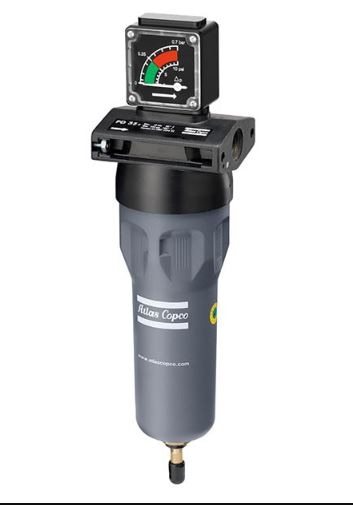 | Air Line Filters DD-PD-QD In almost all applications, contamination of the air supply can cause serious performance decline and increase maintenance costs in terms of actual... |
How to find the monsoon weak point before it damages the generator
A purity or flow drop during wet weather points to a treatment-train fault, not automatically a failed generator. For atlas copco air filter monsoon problems and nitrogen generator filter problems in bangalore, inspect the system in operating conditions.
1. Test every automatic drain under pressure. A blocked, stuck-closed or incorrectly piped drain can flood a receiver or filter housing; a stuck-open drain wastes compressed air. Function-test electronic zero-loss drains instead of assuming they work.
2. Record pressure at each filter’s inlet and outlet. A rising differential pressure indicates a saturated or overdue element; a normal reading with poor air quality can indicate an open bypass. Check the filter arrow against actual airflow and confirm the bypass valve is closed after maintenance.
3. Read the differential-pressure gauge or transmitter. Replace missing instruments and investigate gauges that are unreadable, stuck or disconnected; without this measurement, a clogged element can starve the generator unnoticed.
4. Measure pressure dew point at the generator inlet, not only near the dryer. Then inspect the receiver, low points and cold pipework for condensate, because water can form downstream when pipe temperature falls below the dew point.
Replace or resize filtration for particles, liquid water, oil or excessive pressure drop. Add or correct the dryer when the measured pressure dew point remains too high.
Frequently asked questions
Can an Atlas Copco air filter prevent monsoon nitrogen-generator problems?
No. An air filter captures solid particles and entrained liquid droplets, but it does not remove water vapour. A suitable dryer, correctly sized drains, and dew-point verification are needed for humidity control.
How does Bangalore monsoon moisture cause a nitrogen-generator fault?
Warm, moisture-laden compressed air can condense as it cools in receivers, pipes, and filters. Water carryover can foul coalescing elements, overload the dryer, damage valves, and reduce the air quality reaching the nitrogen generator.
Which wet-air symptoms show that the nitrogen feed specification is failing?
Look for water at downstream drains, saturated or rapidly blocked filter elements, pressure-drop increases, failed automatic drains, condensation in the distribution line, and nitrogen purity or flow moving outside the generator’s specified limits.
What filter and dryer sequence should feed a nitrogen generator?
Use an aftercooler and moisture separator with a working drain, followed by appropriately rated particulate and coalescing filtration, then a dryer selected for the required pressure dew point. Add final filtration at the nitrogen generator inlet when its manufacturer specifies it.
How can you find the monsoon weak point before it damages the generator?
Check drains, receiver bottoms, filter bowls, pressure drop, pipe low points, dryer dew point, and inlet-air conditions during wet weather. Compare measured results with the nitrogen generator’s inlet pressure, flow, temperature, and air-quality requirements.
Related products
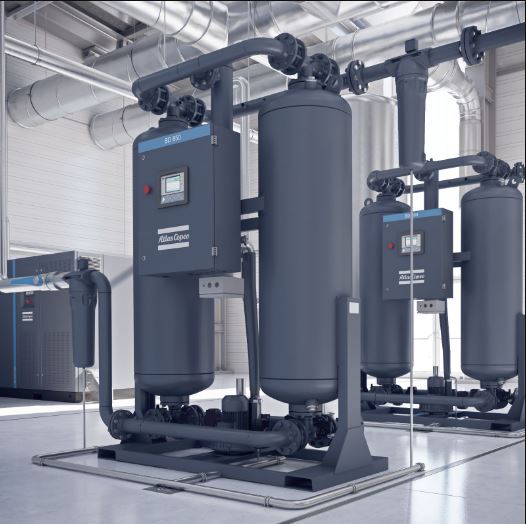 | Desiccant Type Air Dryer Dry and clean compressed air is essential for a broad range of industrial applications. View product → |
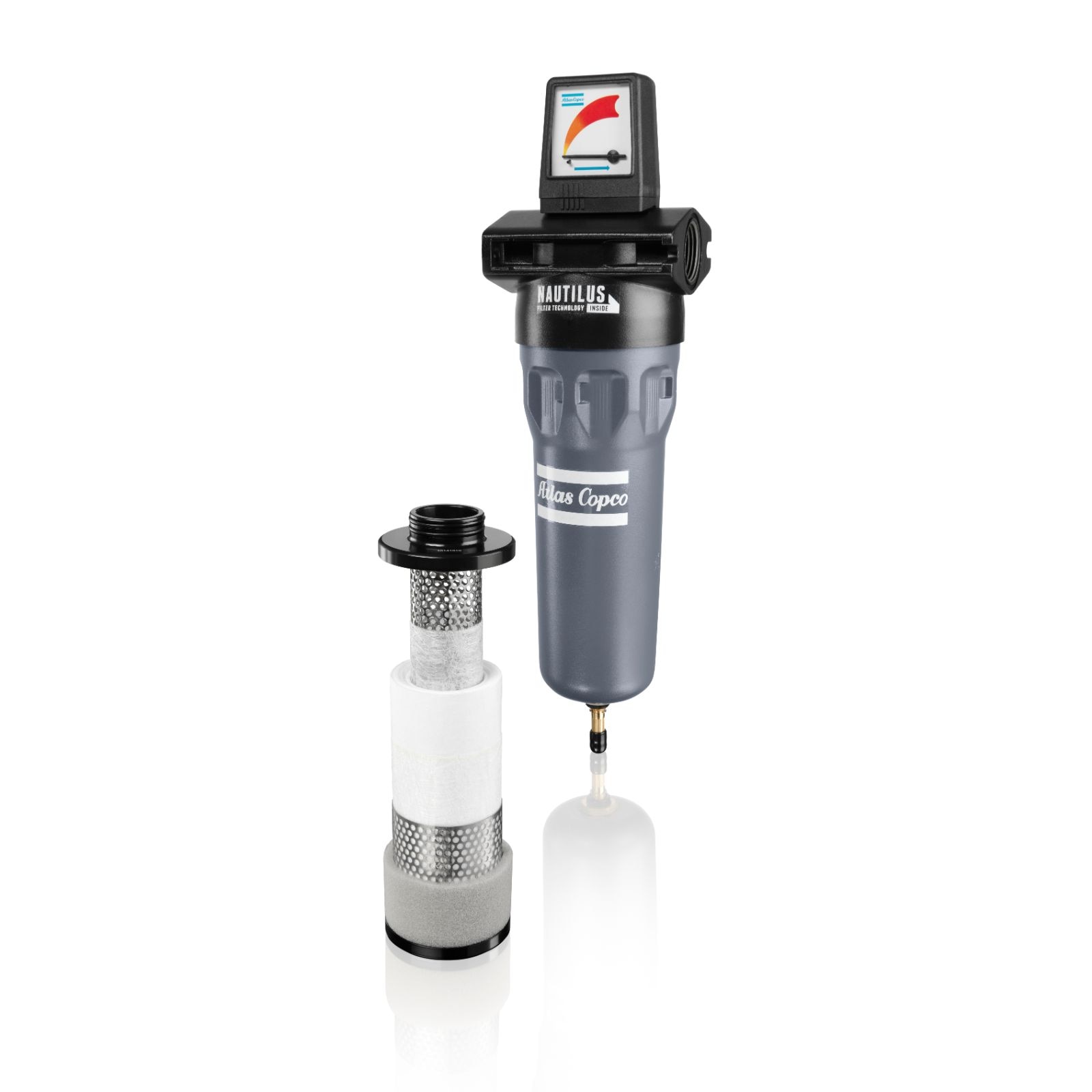 | Air Line Filters UD+ UD+ filters efficiently reduce oil aerosol, wet dust and water drops in your compressed air stream to protect your investment, equipment and... |
 | Refrigerated Air Dryer The air that leaves a compressor reaches 100% humidity. Aftercoolers and drains are the first line of defense against water in your system. View product → |
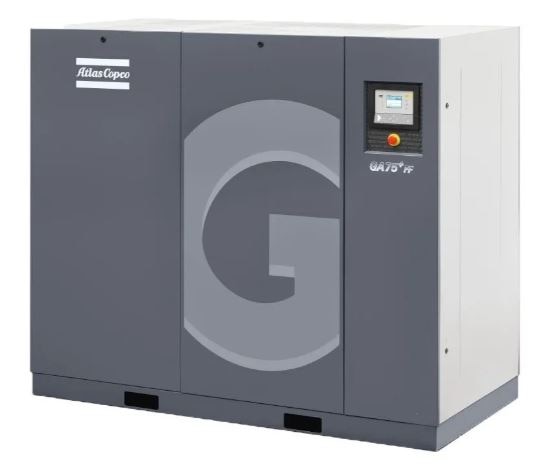 | Oil Lubricated Screw Air Compressor GA30 - 90 & GA37 - 90VSD Atlas Copco’s GA30+ - 90 compressors bring you outstanding sustainability, reliability and performance, while minimizing the total cost of ownership. |