
A piston compressor can be a strong clean-air choice when your demand is intermittent, your flow rate is modest, or your process needs high pressure. By the end, you will be able to distinguish oil-free compression from filtered oil-lubricated air, specify measurable air quality, assess oxygen-generation risks, and compare total operating costs.
Key takeaways
- Choose piston compression for intermittent, low-flow, high-pressure demand.
- Define clean air using ISO 8573-1 classes, not the label oil-free alone.
- Use only oxygen-compatible equipment approved by the compressor manufacturer.
- Compare lifecycle energy, ventilation, noise, maintenance, and installation costs.
When does a piston compressor make financial and operational sense?
A piston compressor is worth considering when demand is intermittent, flow is relatively low, pressure is high, or installation space is limited. Its compact design and lower initial cost can suit a small clean-air system, but industrial piston compressor benefits disappear when the machine must run near full capacity all day.
Base the decision on these measured requirements:
- Average and peak flow at the required operating pressure
- Required pressure and allowable pressure fluctuation
- Operating hours and starts per hour
- Continuous-duty rating and permitted duty cycle
- Receiver volume, redundancy, and available installation space
Do not select the unit from motor size or nameplate free-air delivery alone. Nameplate flow may not equal delivered flow at your pressure, and an intermittent-duty model can overheat or wear quickly when used as a 24/7 process compressor.
The choice becomes weaker for continuous, high-volume production. Pulsating flow, vibration, noise, discharge heat, valve and piston-ring wear, seal maintenance, and finite duty-cycle suitability can outweigh the compact package and purchase-price saving. A receiver, pulsation control, pressure relief, and stable piping are essential where instruments or PSA equipment cannot tolerate pressure swings.
The piston compressor benefits for clean air businesses in Bangalore depend on total operating cost, including filters, drains, scheduled rebuilds, technician time, and downtime—not the purchase invoice alone. A rotary screw or centrifugal compressor deserves comparison when demand is steady and high.
What does clean compressed air actually mean?
“Oil-free” does not define clean compressed air. ISO 8573-1 reports three separate purity classes in the format particles:water:oil, such as 2:4:1. Lower class numbers indicate tighter limits, and you must select each class for the process rather than request an “oil-free compressor” without targets.
1. State the required ISO 8573-1 class for particles, water, and oil. Food-contact air, pharmaceutical processes, electronics assembly, and dental air do not automatically share the same specification.
2. Distinguish the compressor design. An oil-free piston compressor has no lubricating oil in its compression chamber. An oil-lubricated piston compressor uses downstream coalescing and particulate filters to reduce oil carryover. Filtration helps, but it does not make oil-lubricated generation equivalent to oil-free compression for every process.
3. Specify the complete air-treatment train. Even an oil-free package needs an aftercooler, moisture separator, receiver, automatic drains, and a dryer when the pressure-dew-point target demands it. Add application-specific particulate, sterile, or activated-carbon filtration where the process requires it.
Ambient dust, pipe scale, degraded seals, wear particles, and intake hydrocarbons can still contaminate air. That is why an oil free piston compressor in Bangalore needs correctly sized treatment and maintenance, not just an oil-free label. The piston compressor clean air benefits are lower source oil risk and simpler contamination control—not permission to skip verification.
Which clean-air applications gain the most from piston compression?
Food-contact air, pharmaceutical filling, electronics assembly, dental tools, laboratory instruments, and intermittent packaging stations gain the most from piston compressor clean air benefits when flow is modest, pressure is high, and demand starts and stops.
An oil-free design introduces no oil from the compression chamber, reducing source contamination risk while offering compact installation and strong high-pressure performance.
| Application | Best fit | Main safeguard |
|---|---|---|
| Food and beverage contact air | Intermittent blowing, filling, and conveying | Aftercooler, dryer, particulate and sterile filtration |
| Pharmaceutical manufacturing | Small batch or point-of-use air | Validate ISO 8573-1 class, filtration, and microbial control |
| Electronics assembly | Dry air for tools and cleaning | Control particles, condensate, pulsation, and static-sensitive discharge |
| Medical and dental air | Chairside tools and small systems | Meet the applicable medical-air standard; oil-free alone is not approval |
| Laboratory work | Instrument air and occasional analysis | Receiver and stable pressure at the instrument |
| Packaging and instrumentation | Short, repeated demand peaks | Check starts per hour and continuous-duty rating |
These industrial piston compressor benefits weaken when a unit designed for intermittent service runs 24/7. Pulsating delivery, vibration, acoustic noise, discharge heat, piston-ring and valve wear, and seal maintenance can disrupt sensitive equipment or shorten service life.
Use a correctly sized receiver, pulsation control, pressure relief, stable piping, and treatment equipment matched to the required pressure-dew point, particles, water, and oil class. Direct connection to a PSA generator or precision instrument without checking allowable pressure fluctuation can cause unstable operation and premature failure.
What must you verify before using a piston compressor for oxygen generation?
A piston compressor for oxygen generation supplies compressed feed air; it does not generate oxygen. The PSA generator or concentrator uses molecular-sieve beds to separate oxygen from nitrogen, so the compressor must match that unit rather than be selected independently.
Before connection, obtain the generator manufacturer’s written limits for:
- Inlet pressure and flow at the generator connection
- Continuous or intermittent duty cycle
- Allowable pressure fluctuation and required pressure stability
- Maximum inlet-air temperature
- Permitted oil and hydrocarbon carryover
- Particulate, moisture, and filtration requirements
- Receiver volume, pressure-relief settings, and allowable starts per hour
Oil-free does not mean automatically approved for oxygen service. Confirm oxygen-compatible materials, seals, lubricants, cleaning procedures, particulate control, moisture removal, pressure protection, and documented approval for the complete compressor, treatment train, receiver, piping, and generator configuration.
An oil-free package still needs an aftercooler, moisture separator, drains, and application-specific filtration; add a dryer when the PSA supplier specifies one.
Industrial process air is not the same as medical oxygen, medical air, or breathing air. Use this distinction before specifying the system:
| Air type | What it requires | What a compressor alone proves |
|---|---|---|
| Industrial process air | Process-specific purity and pressure control | Feed-air supply only |
| PSA oxygen | Validated generator, oxygen-compatible downstream installation, and oxygen-service controls | Not oxygen production |
| Medical or breathing air | Applicable medical-gas or breathing-air standard, monitoring, and validation | No approval from “oil-free” status alone |
How should a Bangalore business compare the total cost and installation risk?
Compare the installed cost, not the motor price. For clean-air businesses in Bangalore, warm dusty intake air, seasonal humidity, poor ventilation, undersized aftercooling, blocked intake filters, and badly drained condensate can turn a cheap unit into a contamination and downtime problem.
- Request measured flow at operating pressure, not free-air delivery alone.
- Record peak demand, average demand, operating hours, acceptable pressure fluctuation, duty-cycle rating, allowable starts per hour, and maintenance intervals.
- Specify the ISO 8573-1 class for particles, water, and oil, plus the pressure-dew-point target.
- Confirm receiver volume, redundancy, noise and vibration limits, intake-filter inspection frequency, ventilation, aftercooler capacity, condensate-drain arrangement, and dryer sizing for the actual pressure and inlet conditions.
| Cost or risk | Piston option | Check before choosing |
|---|---|---|
| Purchase | Usually lower initial price | Confirm flow at pressure and peak capacity |
| Maintenance | Valves, piston rings, packings, seals, filters, drains, and scheduled rebuilds | Price parts, labour, technician access, and service intervals |
| Operation | Efficient near its design point | Reject an intermittent-duty unit for continuous running |
| Downtime | A failed valve or ring stops production | Cost lost hours and confirm redundancy |
| Treatment | Receiver, aftercooler, drains, dryer, and filtration remain necessary | Size the dryer for the pressure-dew-point target |
These checks reveal the piston compressor benefits for clean-air businesses in Bangalore and whether an oil free piston compressor in Bangalore fits your duty cycle. Raya Virra Sales can translate the clean-air specification into compressor, receiver, dryer, filtration, piping, and service requirements instead of selecting from pressure and motor power alone.
Related product
Frequently asked questions
When does a piston compressor make financial and operational sense?
It suits intermittent demand, relatively low flow, high pressure, and restricted installation space. Its advantage declines when it runs near full capacity throughout the day.
What does clean compressed air actually mean?
Clean air means meeting specified limits for particles, water, and oil under ISO 8573-1. An oil-free piston compressor addresses oil contamination at the compression stage but does not remove moisture or particles by itself.
Which clean-air applications gain the most from piston compression?
Small laboratories, dental equipment, instrument air, intermittent packaging, and other low-flow applications can benefit when pressure demand is high and duty cycles are short.
What must you verify before using a piston compressor for oxygen generation?
Confirm oxygen compatibility for the compressor, seals, lubricants, piping, filters, and storage vessel. Obtain written manufacturer approval and follow the oxygen generator supplier's pressure, purity, ventilation, and maintenance requirements.
How should a Bangalore business compare total cost and installation risk?
Compare purchase price with electricity, duty cycle, maintenance, noise control, ventilation, condensate handling, floor loading, spare parts, and downtime. Check the available electrical supply, room temperature, access route, and service support before installation.
Related products
 | Atlas Copco Oil Free Reciprocating Air Compressor Oil Free Reciprocating Air Compressor LT-LF-LZ-LE Atlas Copco introduced the first piston compressor in 1904. View product → |
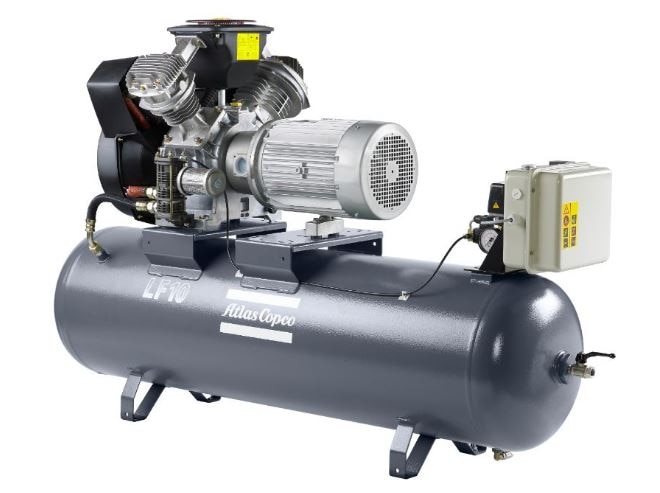 | Atlas Copco Oil Free Reciprocating Air Compressor LE-LF-LT-LB Atlas Copco introduced the first piston compressor in 1904. Since then, we have continuously advanced the technology, most recently with the... |
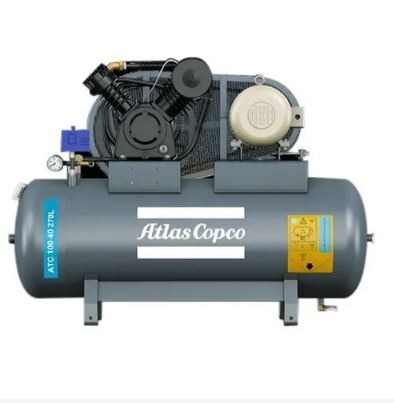 | Oil Lubricated Piston Compressor ATC30 - 100 The Automan series has been designed for maximum productivity and longer lifetime. |