
The correct dryer size comes from the oxygen generator’s actual compressed-air demand, the compressor flow available at the same time, and the dryer’s capacity after site-condition corrections. By the end, you will be able to calculate a defensible design flow, test Bangalore operating conditions, and reject a nameplate rating that cannot maintain pressure and dew point at peak demand.
Key takeaways
- Size from maximum compressed-air inlet flow, not oxygen product flow.
- Include purge, regeneration and blowdown air in the dryer calculation.
- Convert flow at matching pressure and temperature reference conditions.
- Check dew point, pressure drop and air quality before selecting capacity.
Start With the Airflow the Oxygen Generator Actually Needs
Begin refrigerated air dryer sizing with the oxygen generator’s specified compressed-air inlet flow at maximum purity and operating pressure—not its oxygen product-flow rating. The inlet figure must include purge, regeneration and blowdown demand. PSA air-to-oxygen ratios change with generator design, purity target, inlet pressure and operating cycle, so product flow alone can undersize the dryer.
Collect these values before starting oxygen generator dryer selection:
- Generator inlet-air flow in Nm³/h or CFM at the required purity and pressure
- Compressor free air delivery (FAD) available at the dryer inlet
- Maximum compressor discharge pressure and aftercooler outlet temperature
- Design ambient temperature, or cooling-water temperature for a water-cooled unit
- Required pressure dew point and maximum allowable pressure drop
- Operating schedule, compressor sequencing and planned oxygen-generation expansion
Use the maximum compressed-air flow that can reach the dryer simultaneously. If two compressors can load together, use their maximum coincident FAD; do not add motor nameplate powers. If controls prevent simultaneous operation, document that sequencing and the failure mode that could activate another compressor.
| Flow figure | Use in dryer selection | Consequence of using it alone |
|---|---|---|
| Oxygen product flow | Output reference only | Can produce an undersized dryer |
| Generator inlet flow | Primary sizing figure | Captures production and purge air |
| Compressor FAD | Supply cross-check | Shows whether the compressor can sustain demand |
| Dryer rated capacity | Model limit under stated conditions | Cannot replace the generator’s inlet-flow figure |
Convert the Flow Using the Dryer’s Rating Conditions
A dryer rated at 100 Nm³/h is not automatically a 100 Nm³/h dryer at your Bangalore installation. That figure applies only to the manufacturer’s stated inlet-air temperature, ambient or cooling-water temperature, operating pressure, pressure dew point and allowable pressure drop.
Higher inlet temperature and higher ambient temperature reduce the refrigeration system’s ability to condense moisture. Lower operating pressure also reduces the usable compressed air dryer capacity. A unit rated at 100 Nm³/h under cooler, higher-pressure test conditions may deliver less at your site.
Do not apply a fixed 10% or 20% oversize rule. Give the supplier these inputs and request the corrected capacity:
- Maximum air temperature entering the dryer after the aftercooler
- Design ambient temperature, or cooling-water inlet and outlet temperatures
- Compressor discharge pressure at the dryer inlet
- Required pressure dew point
- Maximum flow in the same units and reference conditions as the rating
- Allowable pressure drop across the dryer, filters and drains
The selection sheet must show the reference conditions, actual Bangalore design conditions and resulting derated capacity. Check whether the quoted flow is Nm³/h, Sm³/h, actual m³/h or CFM; these values are not interchangeable.
A dryer that meets flow only before correction can restrict the oxygen generator at peak demand. Excessive pressure drop then forces a higher compressor discharge pressure, increasing energy use and potentially reducing generator output.
Work a Peak-Demand Example Before Choosing Capacity
A dryer must cover the air peak that arrives at the compressor outlet, not just the oxygen product-flow rating. Use the generator manufacturer’s compressed-air requirement at maximum purity and inlet pressure, including purge, regeneration and blowdown air; then add other users operating at the same time.
Example: the generator requires 120 Nm³/h, a pneumatic production load uses 80 Nm³/h, and a planned second generator will add 40 Nm³/h. The simultaneous design flow is 240 Nm³/h. Add a 10% operating margin, giving 264 Nm³/h before correcting that figure to the dryer’s stated reference conditions.
| Demand item | Calculation | Flow |
|---|---|---|
| Existing oxygen generator | Manufacturer’s peak inlet requirement | 120 Nm³/h |
| Concurrent plant load | Measured or specified peak | 80 Nm³/h |
| Planned expansion | Additional peak requirement | 40 Nm³/h |
| Design flow before margin | 120 + 80 + 40 | 240 Nm³/h |
| Dryer selection flow | 240 × 1.10 | 264 Nm³/h |
Use the corrected 264 Nm³/h value on the dryer selection sheet, not the compressor’s nominal horsepower or nameplate capacity. Confirm that compressor free air delivery also covers the same peak after accounting for pressure, temperature and duty cycle.
Pressure drop is part of the calculation. The dryer, filters and drains must leave the generator with its required inlet pressure at 264 Nm³/h; otherwise, raising compressor discharge pressure increases energy use and can reduce available generator capacity. This is the practical core of oxygen generator dryer selection and refrigerated air dryer sizing.
Check Dew Point, Pressure Drop and Air Quality Together
A dryer is technically suitable only when its dew point, pressure drop and delivered air quality meet the oxygen generator’s limits at the same operating conditions. A large compressed air dryer capacity does not compensate for +3 °C pressure dew point if the generator or distribution system requires −20 °C, −40 °C or lower.
Check the selection sheet for these points:
- Confirm the stated pressure dew point at the actual inlet-air temperature, operating pressure and design ambient or cooling-water temperature. A standard refrigerated dryer produces about +3 °C under rated conditions; choose a desiccant dryer for a lower specified dew point.
- Confirm pressure drop through the dryer, inlet and outlet filters, and drains at peak flow. The oxygen generator must still receive its required inlet pressure, or you will raise compressor discharge pressure and increase energy use.
- Match air quality to the generator manufacturer’s specification. Check the filter arrangement for liquid water, particles and oil carryover, and identify whether coalescing, particulate or activated-carbon filtration is required.
- Check that the dryer’s corrected capacity uses the maximum coincident compressor flow, not motor horsepower or an uncorrected nominal m³/h figure.
- Verify the drain type and failure behaviour. A failed zero-loss drain or blocked automatic drain can send liquid water downstream.
- Confirm that the stated electrical supply, inlet temperature and ambient temperature match the Bangalore installation.
Reject the selection if any value is missing. A supplier must show that the generator receives clean air at its required pressure and dew point during peak operation, not merely that the dryer’s nameplate flow exceeds the airflow calculation.
What to Demand From a Refrigerated Dryer Supplier in Bangalore
Demand a written selection sheet, not a model number. It must show how the supplier calculated usable capacity at your oxygen generator’s maximum inlet flow, pressure, inlet temperature and Bangalore ambient condition. Without those figures, “which refrigerated air dryer size for fits oxygen generator in bangalore” has no defensible answer.
Compare the offer against these acceptance points:
| Item | Accept | Reject |
|---|---|---|
| Generator demand | Inlet flow at maximum purity and pressure, including purge, regeneration and blowdown | Oxygen product-flow rating alone |
| Capacity | Derated capacity at actual pressure, inlet temperature and ambient temperature | Nameplate capacity with no correction curve |
| System peak | Maximum coincident compressor FAD, supported by the control sequence | Sum of motor ratings or unverified assumptions |
| Performance | Guaranteed pressure dew point and pressure drop at peak flow | Dew point or pressure drop stated without test conditions |
| Air quality | Filter grades, oil carryover, particulate limits, drain type and materials documented | “Dry air” presented as proof of oxygen-service cleanliness |
Request the generator datasheet, compressor FAD curve, dryer performance sheet, correction-factor chart, P&ID, operating schedule and expansion allowance. Ask for minimum-load behaviour and the failure response if one compressor or drain stops. Raya Virra Sales can help compare those documents, but the signed operating conditions must come from the equipment manufacturers.
For a refrigerated dryer supplier in bangalore, reject any proposal that replaces the stated pressure dew point with a vague “suitable for oxygen generation” claim. Check filtration and oxygen-service safety separately; refrigeration alone does not remove oil vapour, particles or microbes.
Related products
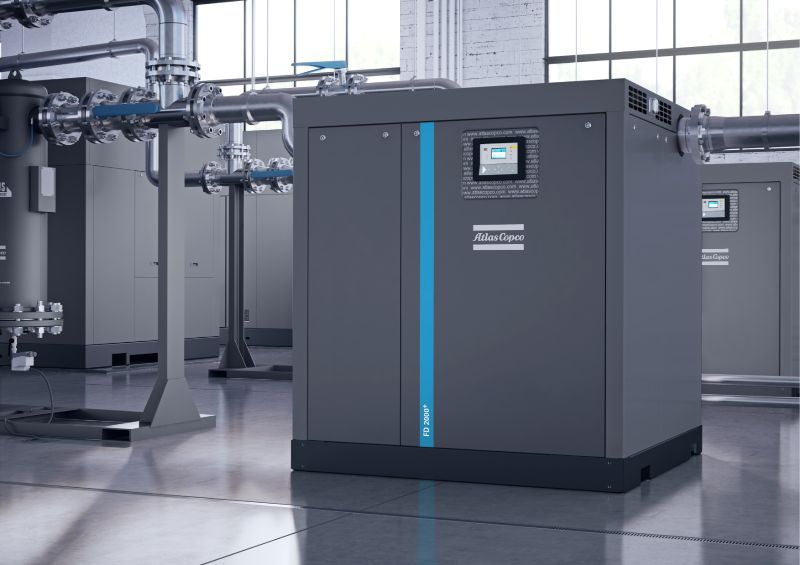 | Refrigerated Air Dryer F6 - 400 The air that leaves a compressor reaches 100% humidity. Aftercoolers and drains are the first line of defense against water in your system. |
 | Refrigerated Air Dryer The air that leaves a compressor reaches 100% humidity. Aftercoolers and drains are the first line of defense against water in your system. View product → |
Frequently asked questions
Should dryer sizing use oxygen output or generator inlet airflow?
Use the oxygen generator’s specified compressed-air inlet flow at maximum purity and operating pressure. Include purge, regeneration and blowdown demand because product flow alone can undersize the dryer.
How do you compare a dryer’s rated capacity with an oxygen generator’s airflow?
Convert the generator’s flow to the dryer’s rating conditions before comparing capacities. Match the stated pressure, inlet temperature and flow reference, such as FAD or actual volumetric flow.
Why should peak demand be checked before choosing dryer capacity?
Peak demand reveals whether simultaneous generator operation, regeneration, purge and blowdown exceed the dryer’s usable capacity. Size against that maximum operating case rather than average flow.
What should you check besides refrigerated dryer capacity?
Check outlet pressure dew point, pressure drop at full flow and the air-quality specification required by the oxygen generator. Confirm the dryer meets those conditions at peak demand.
What should you ask a refrigerated dryer supplier in Bangalore?
Request capacity at your actual inlet pressure and temperature, pressure-drop data at peak flow, outlet pressure dew point, air-quality documentation and service details for Bangalore.