
A nitrogen generator that recovers slowly, loses purity, or cannot reach its product pressure may be receiving too little feed air through a restricted filter assembly. By tracing pressure at operating flow, checking drains and valves, selecting a matched replacement, and restarting safely, you can separate a blocked combination filter from a fault elsewhere in the air system.
Key takeaways
- Compare upstream and downstream pressure at peak nitrogen demand.
- Check drains, flow arrows, element seating, and connections before replacing parts.
- Select a filter rated for flow, pressure, temperature, and contamination load.
- Confirm recovery by measuring differential pressure and generator output after replacement.
How to prove the combination filter is restricting generator airflow
Measure pressure on both sides of the combination filter while the nitrogen generator is producing at peak demand. A filter is restricting flow when upstream pressure remains adequate, downstream pressure falls, and the differential pressure is higher than the element manufacturer’s limit or rises at the same flow rate.
Static pressure with no demand can hide the fault.
1. Record compressor discharge pressure and filter inlet pressure. If both are low, investigate compressor capacity, receiver pressure, dryer restriction, or a faulty regulator before blaming the filter.
2. Confirm every isolation valve is fully open and compare pressure before and after each valve. A large pressure loss across one valve identifies a partially closed valve; a normal filter differential clears the filter.
3. Check the automatic drain and bowl for standing condensate. A blocked drain can flood the element and raise pressure drop, while a failed drain also sends wet air toward the generator.
4. Measure pressure at the generator inlet. Normal filter outlet pressure but low inlet pressure points to undersized piping, a blocked silencer, check valve, hose, or generator inlet fitting. Membrane and PSA faults can also cause low flow without filter blockage.
5. Do not use a bypass as proof. It can restore nitrogen generator airflow temporarily while transferring oil, water, and particles downstream. Log inlet pressure, outlet pressure, flow, temperature, and dew point; these readings expose pre micro filter airflow problems and support a safe decision to replace the element.
Check drains, flow direction, and the filter installation before replacing parts
A blocked or failed drain leaves liquid water in the filter bowl, where airflow carries droplets into the coalescing stage and onward to the nitrogen generator. Moisture can saturate the element, raise pressure drop, damage membranes or adsorbent beds, and produce unstable purity.
1. Isolate and depressurise the filter, then inspect the bowl, automatic drain, manual drain valve, and drain tube. Remove sludge or oil, confirm the drain opens at operating pressure, and ensure the outlet does not discharge into a flooded or kinked line.
2. Follow the flow-direction arrow on the housing. Install the coarse particulate stage upstream of the finer coalescing stage; reversing them loads the fine element rapidly and cuts generator inlet flow.
3. Check that each element sits in its correct housing and is fully seated against its seal. Inspect the O-ring, element-retaining parts, bowl threads, and bowl for damage. A crushed seal or loose element creates an internal bypass, so pressure drop can look normal while water, particles, and oil pass through.
4. Keep the bowl vertical with its drain at the lowest point. A sideways or inverted filter traps condensate and prevents the drain from removing it.
5. Treat a bypass as a temporary maintenance route, not a repair. Close and positively isolate it afterward, leak-test the filter path, and confirm the generator receives air through both stages.
After correction, run the generator through its specified purge and purity-recovery cycle before judging the repair.
Choose and identify a replacement filter that will carry the real air demand
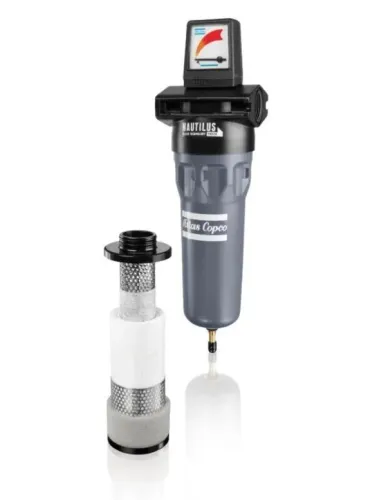
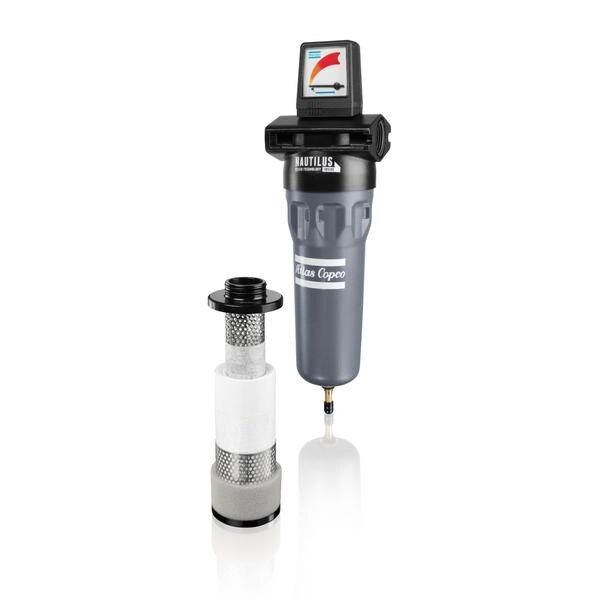
Treat a combination pre micro filter for nitrogen generator service as a rated assembly, not a pipe-size accessory. Select it for the generator’s peak feed-air demand during receiver charging, compressor unloading, and maximum nitrogen production—not its average flow.
Confirm capacity at your actual inlet pressure, temperature, and allowed pressure drop; a catalogue flow figure at another reference condition can overstate performance.
| Detail to match | What to confirm | Failure if wrong |
|---|---|---|
| Flow | Peak inlet flow in Nm³/h or scfm, with the manufacturer’s reference pressure and temperature | Excessive differential pressure starves the generator |
| Pressure | Maximum working pressure and minimum pressure at the filter outlet under load | The housing can be unsafe or the generator can lose capacity |
| Temperature | Maximum compressed-air temperature, including aftercooler failure conditions | Seals, bowl material, or element performance can deteriorate |
| Filtration | Required particle, water, and oil class, such as the generator supplier’s ISO 8573-1 specification | Fine dust or moisture reaches membranes or molecular sieve |
| Oil carryover | Permitted aerosol and oil-vapour concentration in mg/m³, if specified | Oil fouls the separation medium |
| Connection | Port size, thread or flange standard, flow-direction arrow, and service clearance | A matching pipe diameter can still cause leaks or restriction |
| Element | Correct coarse-stage and coalescing-stage order, grade, dimensions, seals, and retaining parts | A generic or reversed element raises pressure drop or permits bypass |
Check the bowl, O-ring, element seat, and retaining hardware against the replacement part number. Reject any filter whose rated flow, pressure-drop curve, or oil limit is unavailable.
Replace the element safely and confirm nitrogen generator recovery
Do not open the housing until the compressor, nitrogen generator, and filter line are isolated and locked out. Close the upstream and downstream isolation valves, shut or positively isolate any bypass, and vent the filter through its designed drain or depressurisation point.
Confirm zero pressure on both gauges before loosening the bowl; never trust a single gauge or a trapped section of pipe.
Use this replacement sequence:
- Lock out the compressor and generator, then identify the stored-pressure source.
- Drain condensate into a suitable container and depressurise the housing completely.
- Remove the bowl and inspect it for cracks, damaged threads, corrosion, and contamination.
- Remove the old element and check the retaining spring, washer, and seating surfaces.
- Fit the correct element in the direction shown by the flow arrow. Do not force or leave it tilted.
- Replace a cut, flattened, hardened, or contaminated O-ring; clean the sealing groove.
- Refit the bowl and tighten it to the manufacturer’s specified torque. Hand-tightening alone can permit bypass leakage.
Restore the valves slowly and leak-test every bowl joint, drain, and connection with approved leak-detection fluid or an instrument suitable for the service. A normal pressure drop does not prove clean air is reaching the generator if the element seal is bypassing.
For nitrogen generator filter recovery, compare filter inlet and outlet pressure at peak flow, then check generator inlet pressure, nitrogen purity, flow, and receiver filling time. Stop and investigate if pressure falls, purity drifts, or the bypass leaks.
Set maintenance triggers from pressure drop, condensate, and local operating conditions
Schedule inspections by load and measured condition, not by a universal monthly date. Establish a clean-element baseline by recording pressure immediately upstream and downstream at the nitrogen generator’s normal flow, then trend the differential pressure.
Use the baseline and these replacement triggers:
- Replace the element when differential pressure reaches the filter manufacturer’s maximum permitted value.
- Replace it when the generator’s minimum required inlet pressure cannot be maintained at operating flow.
- Investigate and replace it after oil contamination, a saturated element, damaged media, or repeated condensate carryover.
- Replace the bowl, seals, or retaining parts when cracks, distortion, a damaged O-ring, or poor element seating could allow bypass.
Inspect the automatic drain during service; do not assume it works because it is fitted. A blocked drain leaves water in the bowl for re-entrainment, while a drain stuck open wastes air and creates a continuous leak.
Increase inspection frequency during Bangalore’s monsoon, after periods of high humidity, and when compressor-room ventilation, ambient temperature, dryer outlet dew point, or compressor oil carryover changes. Log differential pressure, inlet temperature, dew point, drain behaviour, operating hours, and condensate volume so you can see a trend before airflow collapses.
For air line filter maintenance in Bangalore, Raya Virra Sales can help verify that the log reflects the generator’s actual flow and local condensate load rather than a nominal pipe size. If pressure drop remains normal, do not replace the filter: check valves, regulators, tubing, dryer outlet filters, silencers, and the generator inlet instead.
Related products
 | Air Line Filters Pre, Micro & Activated Carbon Filter In almost all applications, contamination of the air supply can cause serious performance decline and increase maintenance costs in terms of actual... |
 | Air Line Filters Combination of Pre & Micro Filter UD+ filters efficiently reduce oil aerosol, wet dust and water drops in your compressed air stream to protect your investment, equipment and... |
Frequently asked questions
How do you prove a combination filter is restricting nitrogen generator airflow?
Measure pressure before and after the filter at peak demand. Restriction is indicated by adequate upstream pressure, lower downstream pressure, and differential pressure above the element limit or rising at the same flow.
What should you check before replacing a nitrogen generator filter?
Inspect the drain, confirm the flow-direction arrow, check element seating, and look for blocked outlets, closed valves, damaged seals, or incorrectly installed connections.
How do you choose a replacement combination pre-micro filter?
Match the replacement to actual air demand, inlet pressure, operating temperature, connection size, filtration rating, drain type, and the manufacturer’s allowable pressure drop.
How do you confirm nitrogen generator airflow recovery after replacement?
Run the generator at demand, compare upstream and downstream pressure, check differential pressure, and verify that generator flow, purity, and operating cycle return to the required values.
Related product
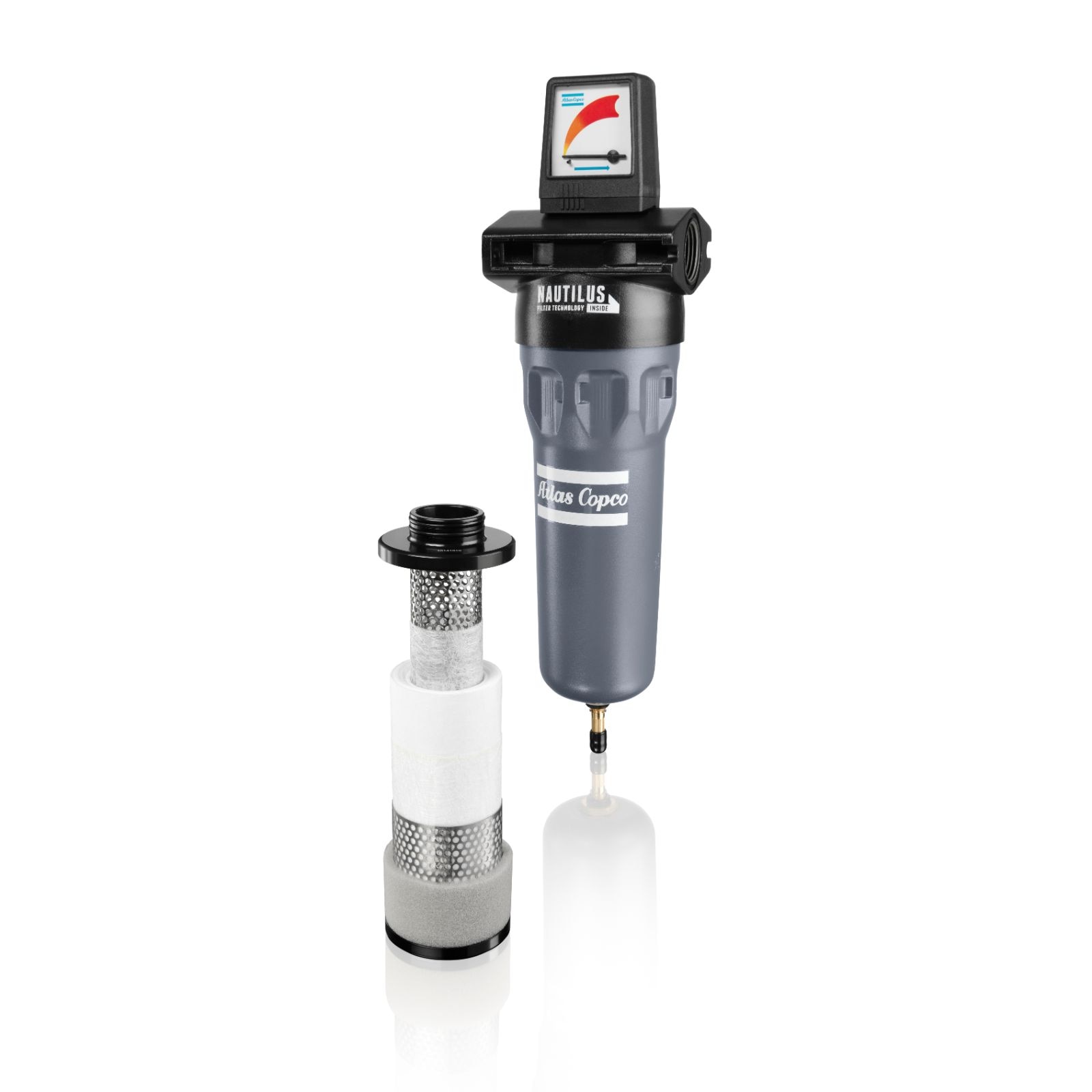 | Air Line Filters UD+ UD+ filters efficiently reduce oil aerosol, wet dust and water drops in your compressed air stream to protect your investment, equipment and... |