
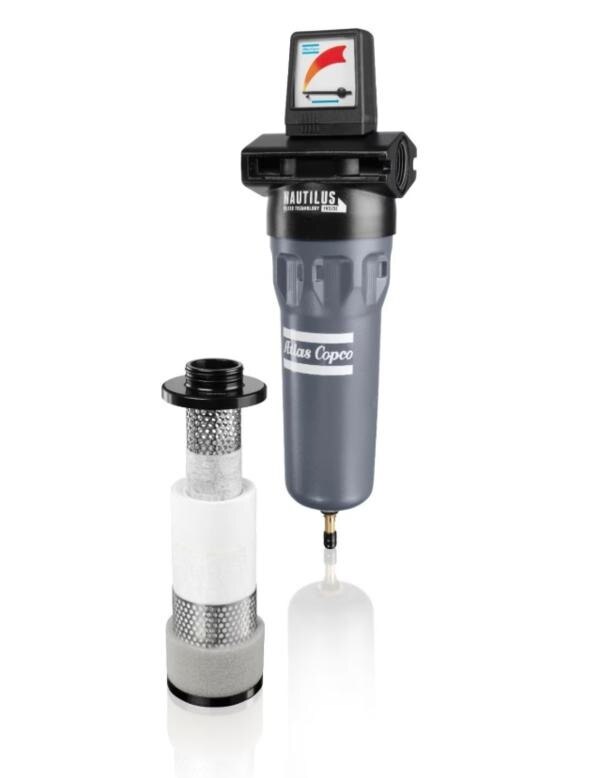
Bangalore’s humid monsoon air creates more condensate inside a compressed-air system, but a UD Plus filter does not remove water vapour or replace a dryer. You will be able to judge whether the filter suits your nitrogen generator by checking the required air-quality class, pressure dew point, flow, pressure drop and installation position.
Key takeaways
- Use pressure dew point, not room humidity, to assess nitrogen-generator feed air.
- A UD Plus filter removes aerosols and particles, not water vapour.
- Match filter grade, flow capacity and pressure rating to the generator specification.
- Drain condensate, inspect elements and check dew point throughout the monsoon.
What Bangalore’s humidity does to nitrogen-generator feed air
A UD Plus filter can protect nitrogen-generator feed air from liquid-water aerosol, oil aerosol and solid particles, but it cannot remove water vapour. The control value you need is pressure dew point, not relative humidity in the compressor room.
Vapour reaching a colder pipe or generator inlet condenses downstream, wetting membrane equipment or disturbing PSA operation.
During Bangalore’s monsoon, warm intake air carries more water mass into the compressor. Compression raises its temperature and pressure; compressor cooling in the aftercooler then drops the temperature and turns part of that vapour into liquid condensate. Use:
- An aftercooler to reduce compressed-air temperature
- A correctly sized moisture separator to remove liquid
- Reliable automatic drains and receiver drainage
- A refrigerated or desiccant dryer to control vapour
Rapid temperature changes create cold spots in piping, especially near the generator, where remaining vapour can condense. A refrigerated dryer commonly provides about +3°C pressure dew point; choose a desiccant dryer when the generator specification requires around −40°C or lower.
The UD Plus filter weather in Bangalore decision is conditional: an air filter for humid conditions handles aerosol and particulate loading only. Size it for peak flow, pressure and temperature, then verify the generator’s inlet-air dew-point limit.
A UD Plus filter is only one part of the moisture-control system
A UD Plus nitrogen generator filter removes contamination carried as droplets or particles, not moisture carried as invisible vapour. It can reduce:
- Liquid-water aerosol after cooling and separation
- Oil aerosol from the compressor
- Solid particles such as rust, dust and desiccant fines
It cannot lower pressure dew point. Water vapour passes through until the air is cooled enough to condense, so a filter alone can leave moisture inside a membrane or PSA nitrogen generator. Atlas Copco air filter monsoon protection therefore depends on the complete treatment train, not the filter cartridge by itself.
Choose the dryer from the generator manufacturer’s inlet-air specification and the coldest downstream pipe or component, not from Bangalore’s outdoor humidity.
| Dryer | Typical pressure dew point | Use |
|---|---|---|
| Refrigerated | About +3 °C at rated conditions | Use when the generator accepts this dew point and downstream piping stays warmer than it. |
| Desiccant | About −40 °C or lower | Use when the generator requires very dry feed air or cold piping could cause condensation. |
Install an aftercooler, moisture separator, automatic drains and receiver drainage before the dryer. Add the dryer when the specified pressure dew point is below what untreated compressed air can achieve. Size the UD Plus filter for peak flow, inlet pressure and temperature; an undersized unit creates pressure drop precisely when monsoon demand rises.
A drain failure or saturated dryer can then expose the generator even though the filter appears clean.
Match the filter to the generator’s actual air-quality specification
Start with the nitrogen generator manufacturer’s inlet-air specification, not the filter name. For ud plus filters for nitrogen generetaor air in bangalore weather, verify the required ISO 8573-1 classes for oil, particles, water and pressure dew point, then match each requirement to measured filter and dryer performance.
- Oil: confirm the final coalescing filter’s oil-aerosol and total-oil rating. ISO 8573-1 oil Class 1 allows no more than 0.01 mg/m³, but a UD Plus element must be rated for the generator’s actual limit.
- Particles: compare the element’s filtration grade and efficiency with the specified particle-size bands, such as 0.1, 0.5 and 1 micrometre. Check the rating at the generator’s maximum flow.
- Liquid water: confirm the separator and filter remove liquid droplets and aerosols at the stated flow. This does not prove protection from water vapour.
- Pressure dew point: obtain the dryer outlet PDP at operating pressure. ISO 8573-1 water Class 4 permits up to +3°C; a filter alone cannot achieve that value.
- Pressure and flow: check maximum inlet pressure, temperature, connection size, flow capacity and clean-element pressure drop. An undersized filter can starve a PSA or membrane generator during demand peaks.
Request the filter data sheet, test conditions and replacement-element grade, then compare them with the generator manual. A drain that fails or a rising differential-pressure indicator can invalidate an otherwise correct selection.
Choose the treatment sequence, location and filter size
Place the bulk water separator and coarse prefilter immediately after the compressor receiver, before the dryer. This removes liquid slugs before they reach the drying or fine-filter elements.
Use this sequence:
- Receiver outlet
- Bulk water separator with an automatic drain
- Prefilter
- Refrigerated or desiccant dryer
- Final coalescing filter
- Activated-carbon filter, when the nitrogen-generator manufacturer specifies oil-vapour removal
- PSA or membrane generator
The final coalescing filter belongs after the dryer, where it receives dry air rather than avoidable liquid carryover. Activated carbon also needs clean, dry air; install it after coalescing filtration and replace it when its specified service limit is reached. This is the practical arrangement for an air filter for humid conditions.
| Stage | Install here | Main job |
|---|---|---|
| Water separator | Before dryer | Remove bulk liquid water |
| Coalescing filter | After dryer | Capture aerosols and fine particles |
| Activated carbon | Last, before generator | Remove oil vapour when specified |
Size an ud plus nitrogen generator filter from maximum simultaneous air demand, not the pipe connection or average flow. Use the manufacturer’s correction factors for actual inlet pressure and temperature, then select a housing whose rated flow exceeds the peak.
Check the resulting pressure drop at that peak; excessive restriction can lower generator inlet pressure and nitrogen output. A normal differential-pressure reading cannot compensate for an undersized compressor, receiver, or filter. Ensure the drain closes reliably: a leaking drain wastes air, while a blocked drain sends water into the element.
Commission and maintain the installation through Bangalore’s monsoon
For atlas copco air filter monsoon protection, commission the package at minimum, normal and peak nitrogen demand. Record inlet pressure, air temperature, flow, pressure dew point and each filter’s differential pressure at every condition; sizing from the pipe diameter or average flow alone can hide a pressure collapse during simultaneous demand.
Use this service checklist through the monsoon:
- Confirm the aftercooler moisture separator removes liquid water and that automatic drains discharge during loaded operation, not just during a manual test.
- Drain the receiver and inspect low points for standing water, especially after overnight shutdowns.
- Measure pressure dew point at the generator inlet. A +3 °C reading does not prevent condensation after pressure reduction, cold pipe sections or shutdown cooling, so inspect downstream low points as well.
- Compare each filter’s differential pressure with its clean commissioning record and the manufacturer’s replacement limit. A rising value indicates loading; a sudden change can indicate liquid carryover or drain failure.
- At each demand point, record nitrogen flow, purity and the generator’s oxygen-breakthrough or purity alarm status.
For ud plus filters for nitrogen generetaor air in bangalore weather, replace elements and service drains before pressure loss reaches the generator’s minimum inlet pressure. Raya Virra Sales can verify these readings against the Atlas Copco filter, dryer and nitrogen-generator requirements rather than accepting purity at one operating point as proof of protection.
Related products
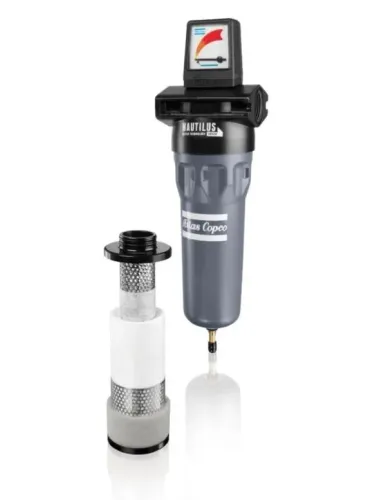
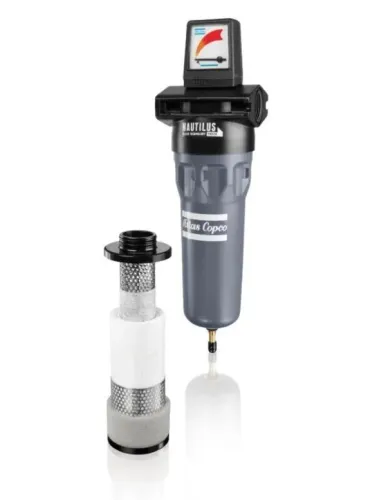
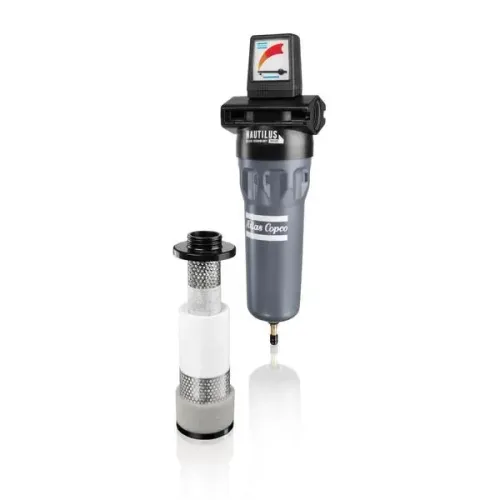
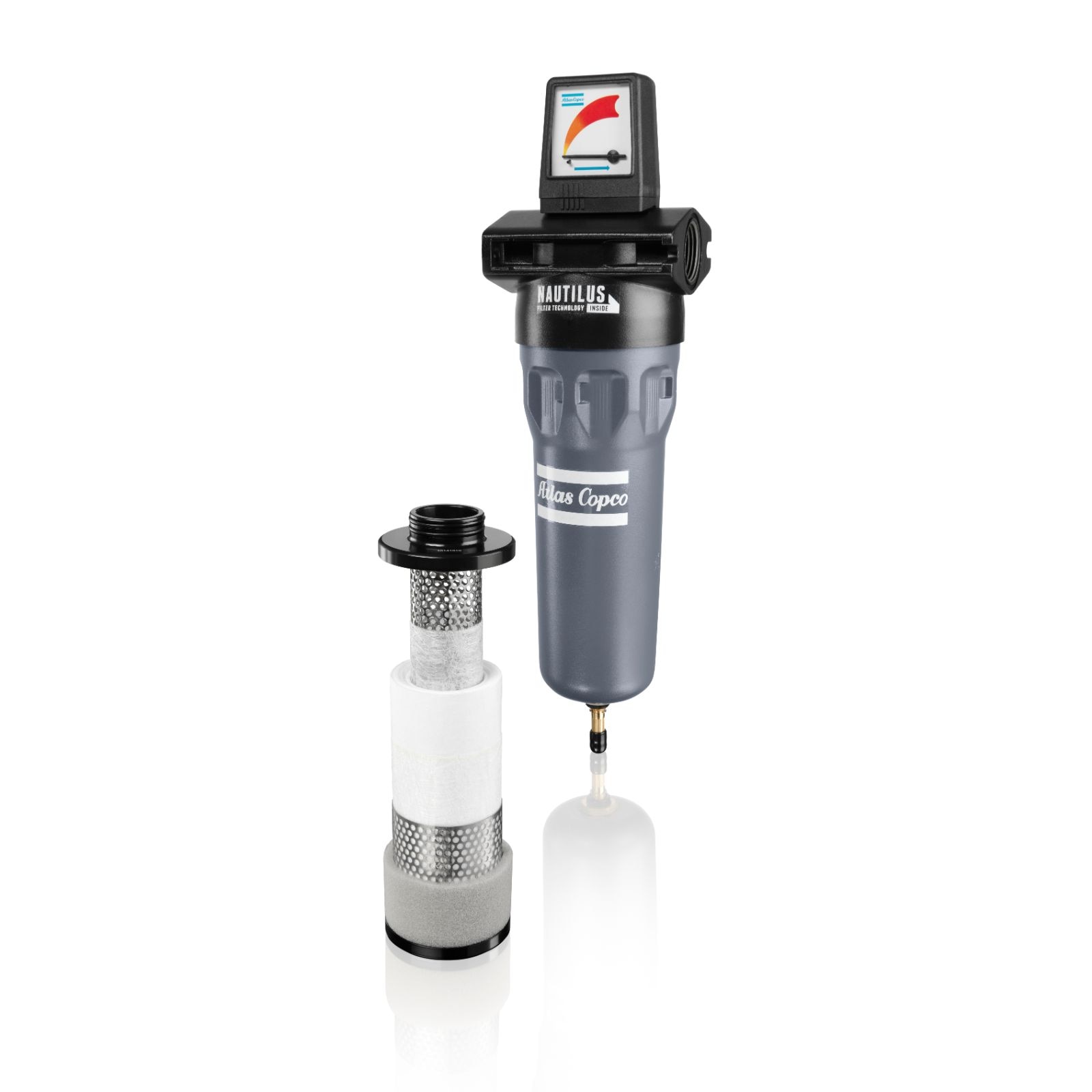 | Air Line Filters UD+ UD+ filters efficiently reduce oil aerosol, wet dust and water drops in your compressed air stream to protect your investment, equipment and... |
 | Air Line Filters Combination of Pre & Micro Filter UD+ filters efficiently reduce oil aerosol, wet dust and water drops in your compressed air stream to protect your investment, equipment and... |
Frequently asked questions
Can a UD Plus filter remove moisture from nitrogen-generator feed air?
It removes liquid-water aerosol, oil aerosol and solid particles, but it does not remove water vapour. Use a refrigerated or desiccant dryer when the generator requires a lower pressure dew point.
What should you measure in Bangalore’s humid weather?
Measure pressure dew point at the nitrogen-generator inlet and compare it with the generator’s air-quality specification. Relative humidity in the compressor room does not provide that control value.
How should you protect nitrogen-generator air during the monsoon?
Use a complete treatment sequence: aftercooler and condensate drain, suitable dryer, correctly rated UD Plus filtration, and clean, dry distribution piping. Keep the equipment indoors and prevent pipe runs from creating low points where condensate collects.
How do you choose the right UD Plus filter for a nitrogen generator?
Check the generator’s required particle and oil limits, inlet pressure, actual airflow, connection size and allowable pressure drop. Select a filter grade and size that meet those values at the installation’s worst operating condition.