
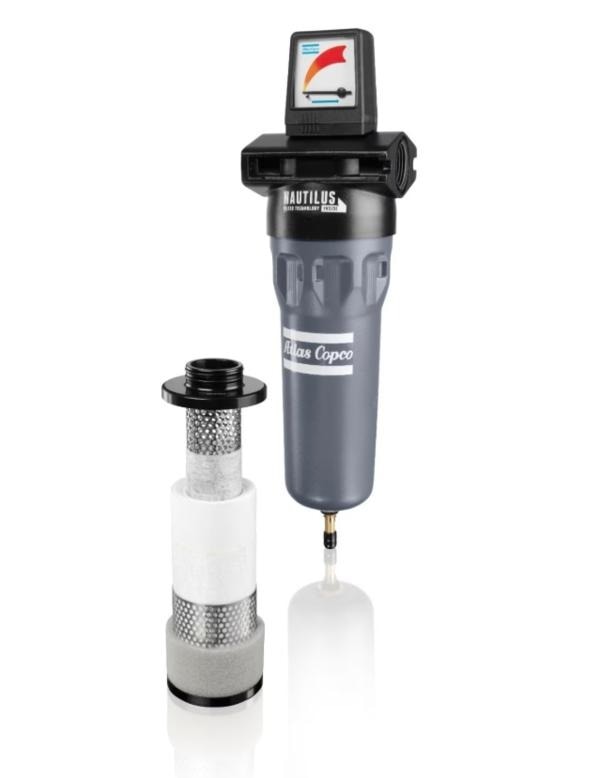
A PSA or VPSA oxygen generator depends on compressed air that is clean, dry and free from oil carryover because its molecular sieve beds are the working surface that separates oxygen from nitrogen. By the end, you will be able to trace each contaminant to the treatment stage that removes it, specify the filter from real operating data, and identify maintenance problems before they reduce oxygen purity or generator output.
Key takeaways
- Protect molecular sieve beds from oil, water, particles, and degraded compressor carryover.
- Place coalescing, particulate, and activated-carbon filters according to the generator’s air-quality requirement.
- Compare pressure drop, flow capacity, filtration grade, service life, and element cost—not pipe size alone.
- Drain condensate, inspect differential pressure, and shorten maintenance intervals during Bangalore’s humid weather.
Why compressed-air contamination damages an oxygen generator’s molecular sieve
A PSA or VPSA oxygen generator depends on clean molecular sieve beds. The sieve adsorbs nitrogen from compressed air while oxygen passes through; contamination blocks adsorption sites, restricts gas flow and accelerates bed failure.
- Liquid water can flood the bed, obstruct valves and cause sieve granules to weaken or break. A saturated bed loses working capacity until it is properly regenerated.
- Water vapour is also harmful because zeolite molecular sieve attracts water strongly. Moisture occupies sites needed for nitrogen adsorption, so oxygen purity and production flow fall.
- Oil aerosol coats the granules and reduces contact between air and the sieve surface. Oil vapour can pass through coalescing filtration and create a persistent film that regeneration does not remove easily.
- Dust, rust, pipe scale and compressor wear particles block passages, damage switching valves and create pressure imbalance across the bed. They can also produce fine debris that spreads through the generator.
- Condensed water and oil can carry contamination deeper into the vessel than a surface filter indicates.
The result is unstable oxygen purity, lower output and a shorter sieve life. “Oil-free oxygen generation” does not mean that oil-lubricated compressed air is acceptable without oil-vapour control, and an oil-free compressor still leaves dust, condensate and pipe debris to manage.
Oxygen generator compressed air filtration should therefore be specified by particle, water and oil performance under ISO 8573-1, not by micron rating alone.
What each filter stage removes, and where it belongs in the air train
The practical order is aftercooling and water separation, particulate prefiltration, coalescing microfiltration, desiccant drying, then activated-carbon adsorption when oil vapour control is required.
1. Aftercooler and water separator: Cool compressor discharge so water vapour condenses, then drain the liquid water. The separator removes condensate and protects downstream elements; it does not remove oil vapour or dry the air.
2. Particulate prefilter: Place it after the separator to catch rust, pipe scale, dust and compressor wear particles. This stage protects the finer coalescing element from rapid blockage.
3. Coalescing microfilter: Install it after the prefilter to remove fine solid particles, liquid oil and water aerosols. Its drain must work, because a saturated element can pass liquid into the next stage.
4. Desiccant dryer: Add it after coalescing filtration when the generator’s inlet specification requires low water vapour or a pressure dew point below the untreated compressed-air level. Dry air also protects the carbon bed.
5. Activated-carbon filter: Put this last when an oil-lubricated compressor can introduce oil vapour or hydrocarbons. Carbon adsorbs vapour that a coalescing filter cannot reliably capture, but it is not a condensate separator.
Use point-of-use filtration beside the oxygen generator when long piping runs can add scale or rust after the compressor-room train. These industrial air filter benefits depend on matching each stage to the generator maker’s particle, water and oil limits, not on a nominal micron rating alone.
A carbon stage is optional only when the inlet specification permits its omission.
How moisture, oil-free compression and activated carbon change the treatment plan
A dryer is needed when the generator’s pressure dew-point specification is lower than the air leaving the aftercooler and water separator. Liquid condensate can reach the molecular sieve; water vapour can condense inside cold pipework or overload the beds. A dryer controls vapour, not free water, so keep effective drains and separation upstream.
Classify the contamination before choosing the treatment stage:
- Liquid water: visible condensate carried from the compressor, aftercooler or receiver. Remove it with separation and automatic drainage; a desiccant dryer does not replace a failed drain.
- Water vapour: invisible moisture measured by pressure dew point. Use a refrigerated or desiccant dryer when the generator inlet specification, ambient temperature or pipe layout creates a condensation risk.
- Oil aerosol: suspended liquid droplets from an oil-lubricated compressor. A coalescing filter removes these after bulk water separation.
- Oil vapour: gaseous hydrocarbon that passes through a coalescing element. Use an activated-carbon stage when the generator requires oil-free feed air and the compressor or pipework can introduce hydrocarbons.
Oil-free compression reduces the source of oil aerosol and vapour, but it does not remove dust, rust, pipe scale or moisture. For oxygen generator compressed air filtration, confirm the inlet limit for particles, water and total oil under ISO 8573-1, not just a micron rating.
Activated carbon cannot absorb condensate, and it needs a documented replacement and monitoring schedule because saturation can pass unnoticed.
How to specify and compare a filter without choosing by pipe size
A filter’s pipe connection does not tell you whether it suits an oxygen generator. Match the generator’s required free-air delivery to the filter’s stated reference conditions, then check the highest or peak flow. A catalogue flow at 7 bar(g) cannot be compared directly with one rated at 10 bar(g).
Ask the supplier to document these values:
- Maximum and normal flow, inlet pressure, inlet temperature and reference conditions used for the flow rating
- Required ISO 8573-1 class for particles, water and oil, plus measured concentration values—not only a nominal micron rating
- Initial pressure drop and end-of-life pressure drop at your actual peak flow
- Required pressure dew point: around +3°C suits a refrigerated dryer, while around -40°C or lower requires desiccant drying and its purge-air cost
- Element service life, drain type, maximum operating pressure, temperature range, materials and replacement differential-pressure limit
| Check | Reject or compare | Why it matters |
|---|---|---|
| Flow rating | Rated flow at different pressure conditions | The filter can be undersized despite an apparently adequate number |
| Pressure drop | Initial versus end-of-life values | Rising resistance cuts PSA feed pressure and increases compressor energy |
| Filtration claim | Micron efficiency without ISO 8573-1 particle, water and oil data | You cannot verify protection of the molecular sieve |
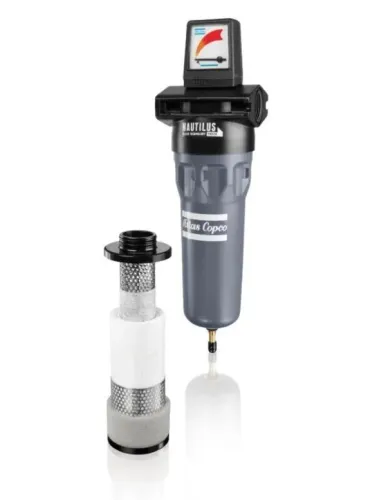
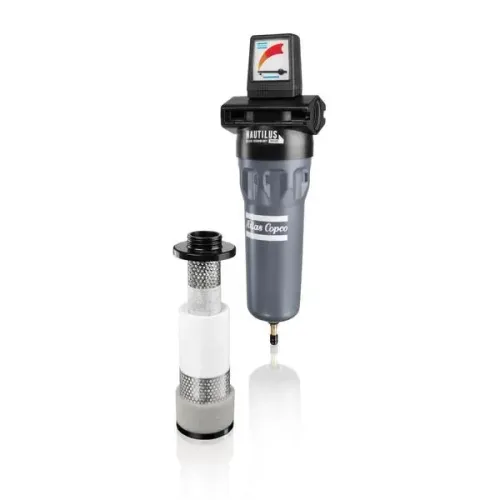
The industrial air filter benefits include cleaner feed air, but only when its data matches the process. An Atlas Copco filter in Bangalore should be selected against monsoon humidity, local dust and the generator’s specification; Raya Virra Sales can help reconcile those site figures with the manufacturer’s datasheet.
Do not confuse this compressed-air filter with a downstream sterile or medical-gas filter.
Related products
 | Air Line Filters Pre, Micro & Activated Carbon Filter In almost all applications, contamination of the air supply can cause serious performance decline and increase maintenance costs in terms of actual... |
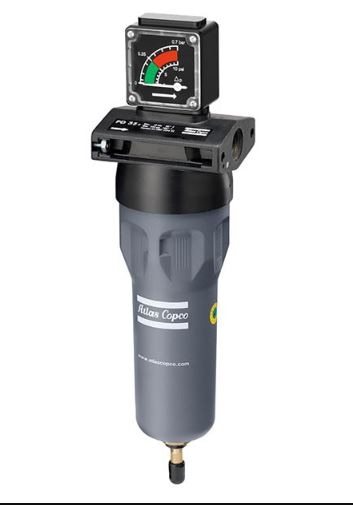 | Air Line Filters DD-PD-QD In almost all applications, contamination of the air supply can cause serious performance decline and increase maintenance costs in terms of actual... |
How to install and maintain filtration in Bangalore conditions
Monsoon humidity and construction dust make post-installation control part of the filtration design. Record ambient temperature, compressor-room dust, operating pressure, maximum flow and the ISO 8573-1 particle, water and oil classes required at the generator. The Atlas Copco air filter benefits for oxygen generators in Bangalore depend on those conditions, not on the housing alone.
1. Fit a reliable automatic drain to every separator, coalescing filter and dryer condensate outlet. Test each drain during commissioning and after heavy rain; a blocked drain sends liquid water into the next stage. Route discharge safely and never bypass a leaking or failed drain.
2. Install point-of-use filtration beside the PSA or VPSA generator when distribution piping is long, rusty or scale-laden. A compressor-room filter cannot remove contamination introduced later by receivers, pipe joints and corroding lines.
3. Record clean differential pressure at commissioning, then trend it weekly through dusty periods and daily during severe loading. Set an alarm and replacement limit from the filter datasheet; rising pressure indicates loading, while an unchanged reading with poor air quality can indicate a damaged or bypassed element.
4. Replace elements at the stated pressure-drop limit, service interval or visible damage—whichever comes first. Isolate, depressurise and lock out the housing before opening it, then replace seals and confirm the drain works.
5. Keep intakes away from traffic dust, exhaust and chemical vapours. A Atlas Copco filter in Bangalore still needs sheltered installation, stable temperature and protection from direct rain.
Frequently asked questions
Why does compressed-air contamination damage an oxygen generator’s molecular sieve?
Oil aerosols, liquid water, rust, dust, and compressor carryover block adsorption sites, restrict airflow, and accelerate molecular-sieve bed failure.
What filter stages does an oxygen generator compressed-air system need?
The air train uses stages matched to the contaminant: particulate filtration for solids, coalescing filtration for water and oil aerosols, and activated carbon when oil vapour or odour control is required.
Does an oil-free compressor remove the need for air filtration?
No. Oil-free compression reduces oil contamination, but the system still needs filtration for particles, moisture, condensate, pipe scale, and downstream contamination.
How should you compare an industrial air filter for an oxygen generator?
Check rated flow, pressure drop, filtration performance, residual oil specification, drain type, element life, differential-pressure indication, maintenance access, and compatibility with the generator—not just connection size.
Related products
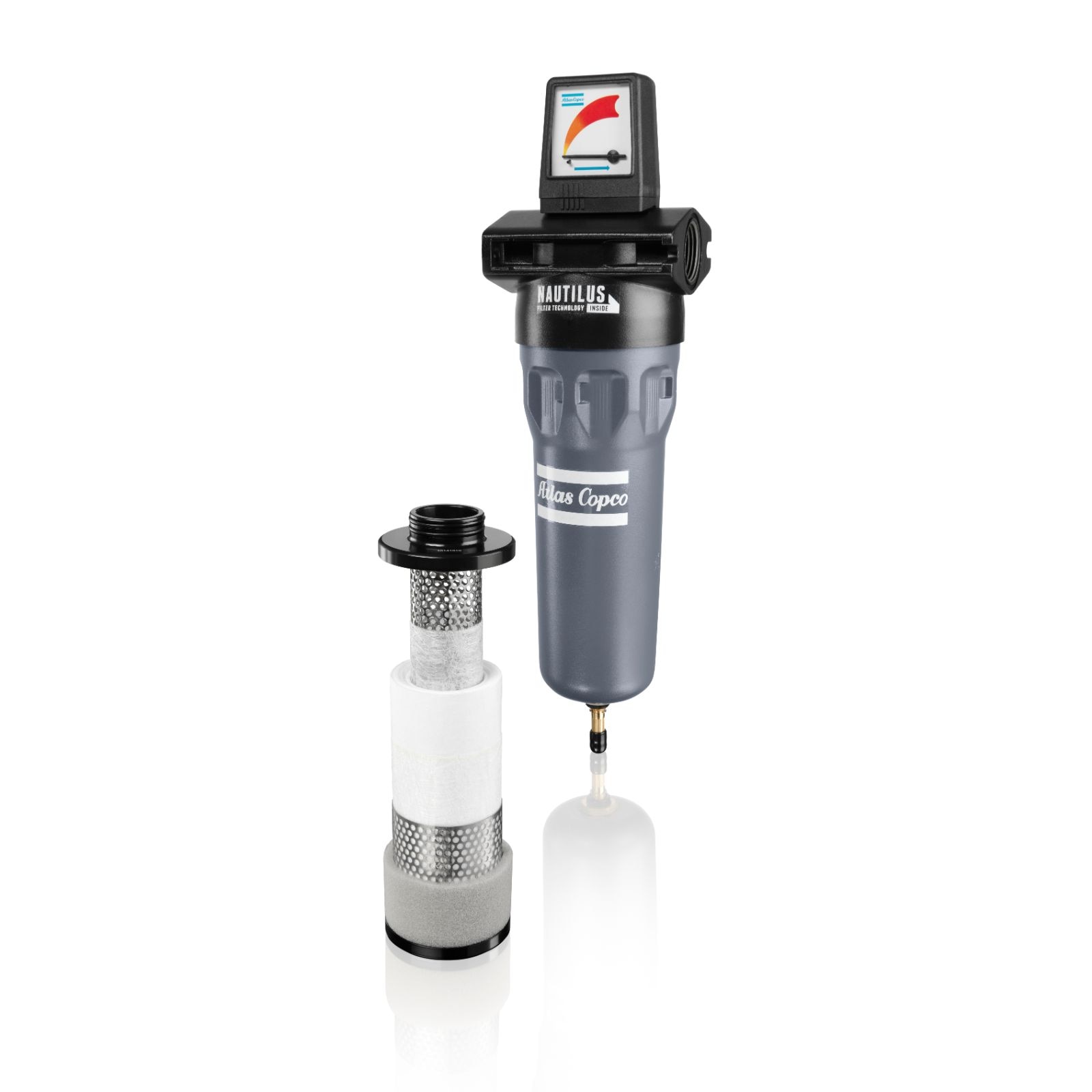 | Air Line Filters UD+ UD+ filters efficiently reduce oil aerosol, wet dust and water drops in your compressed air stream to protect your investment, equipment and... |
 | Air Line Filters Combination of Pre & Micro Filter UD+ filters efficiently reduce oil aerosol, wet dust and water drops in your compressed air stream to protect your investment, equipment and... |